Poor Posture Neck Pain: How Poor Posture Can Lead To Chronic Neck Pain
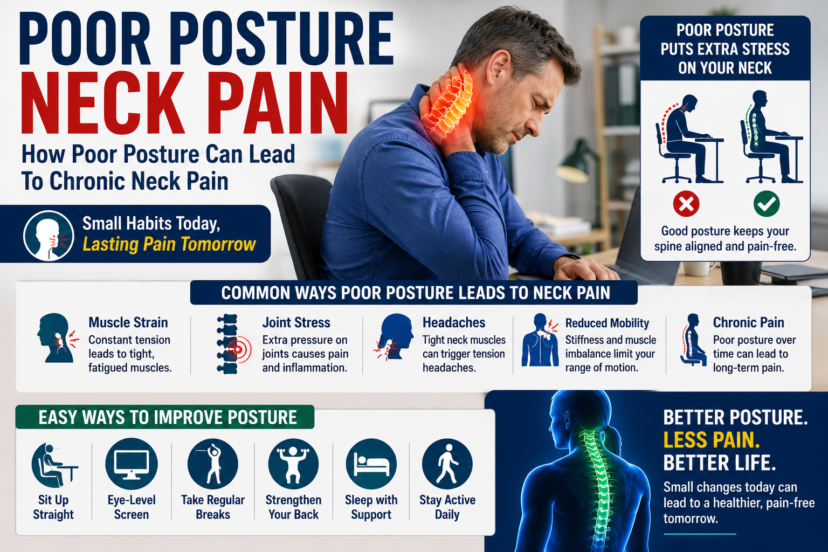
Many people think neck pain appears suddenly, but in reality, it often develops slowly over months or even years. One of the biggest hidden causes is poor posture neck pain. Whether you’re working at a desk, scrolling on your phone, driving, or watching television, small posture mistakes repeated daily can place tremendous stress on the neck.
The good news is that posture can improve at any age. Even small changes in daily habits may help reduce discomfort, improve mobility, and support a healthier, more active lifestyle.
If you’ve been struggling with stiffness, headaches, or recurring neck pain, understanding the connection between posture and neck health may help you find lasting relief.
⭐ Quick Answer: Poor Posture Neck Pain
Poor posture neck pain occurs when repeated forward head posture, slouching, and improper body alignment place excessive stress on the muscles, joints, and ligaments of the neck. Over time, these habits may contribute to chronic neck pain, headaches, stiffness, and reduced mobility. Improving posture and strengthening supporting muscles may help reduce discomfort.
Key Takeaways
Most likely cause: Forward head posture, slouching, and prolonged sitting or screen use that place continuous strain on the muscles, joints, and ligaments of the neck.
Usually serious? No. Most cases of poor posture neck pain develop gradually and often improve with posture correction, regular movement, and strengthening exercises. Persistent or worsening symptoms should be evaluated by a healthcare professional.
First thing to check: Evaluate your posture while using a computer, phone, or driving, and notice whether your head sits forward of your shoulders or your shoulders tend to round forward.
Best solution: Practice good posture throughout the day, adjust your workstation ergonomics, hold screens closer to eye level, take regular movement breaks, and strengthen your neck, shoulders, and upper back muscles.
🔍 Why Poor Posture Causes Neck Pain
Your body functions best when the head, neck, and spine remain properly aligned.
When posture changes, muscles must work harder to support the head.
Over time, this increased workload may contribute to:
- Muscle fatigue
- Tightness
- Joint stress
- Reduced mobility
- Chronic discomfort
Poor posture neck pain often develops gradually rather than suddenly.
💻 Forward Head Posture: The Biggest Culprit
Forward head posture has become increasingly common.
Modern activities that encourage this posture include:
- Smartphone use
- Computer work
- Reading
- Driving
- Tablet use
Why Forward Head Posture Matters
The farther the head moves forward, the greater the stress placed on neck structures.
This additional strain affects:
- Neck muscles
- Shoulder muscles
- Ligaments
- Cervical joints
Over time, poor posture neck pain may become persistent.
📱 Phone Use And Text Neck
Smartphones have changed how people position their bodies.
Looking downward for long periods may contribute to:
- Muscle tension
- Stiffness
- Headaches
- Reduced flexibility
How To Reduce Phone Neck
Helpful strategies include:
- Raising your phone closer to eye level
- Taking regular breaks
- Limiting prolonged screen sessions
Small adjustments often make a big difference.
🪑 Sitting Too Long Can Make Poor Posture Neck Pain Worse
Many adults spend eight or more hours sitting each day.
Prolonged sitting may contribute to:
- Rounded shoulders
- Tight chest muscles
- Weak upper back muscles
- Forward head posture
Better Sitting Habits
Try to:
- Sit upright
- Relax your shoulders
- Keep both feet flat on the floor
- Stand and move regularly
Movement is one of the best ways to protect the neck.
😟 Common Symptoms Of Poor Posture Neck Pain
Symptoms vary from person to person.
Common signs include:
- Neck stiffness
- Headaches
- Shoulder pain
- Pain at the base of the skull
- Reduced range of motion
- Muscle tightness
Many people notice symptoms worsening later in the day.
🦴 Can Poor Posture Cause Chronic Neck Pain?
Yes.
Repeated stress over time may contribute to chronic pain.
Poor posture may increase strain on:
- Muscles
- Tendons
- Joints
- Cervical discs
Although posture alone isn’t always the only cause, it is often an important contributing factor.
🧠 Poor Posture Neck Pain And Headaches
Neck muscles and head structures are closely connected.
When neck muscles become tight, pain may travel into the head.
This may result in:
- Tension headaches
- Pain behind the eyes
- Pressure at the base of the skull
Improving posture may help reduce headache frequency in some individuals.
🚶 Why Movement Matters
The body was designed to move.
Too much sitting may lead to:
- Muscle weakness
- Reduced circulation
- Joint stiffness
- Increased tension
Activities That Support Neck Health
Examples include:
- Walking
- Swimming
- Yoga
- Stretching
- Strength training
Regular movement helps support healthy aging.
💪 Strengthening Exercises For Better Posture
Strong muscles provide better support for the neck and spine.
Chin Tucks
Benefits include:
- Improved alignment
- Better posture
- Reduced forward head position
Shoulder Blade Squeezes
This exercise helps strengthen the upper back.
Benefits include:
- Improved posture
- Better shoulder positioning
- Reduced neck strain
Wall Posture Exercise
Standing against a wall can help reinforce proper alignment.
Consistency matters more than intensity.
🧘 Stretching Exercises That May Help
Stretching may improve flexibility and reduce muscle tension.
Helpful stretches include:
- Upper trapezius stretches
- Side neck stretches
- Chest stretches
- Shoulder rolls
Always move gently and avoid painful positions.
🛏️ Sleep Habits Affect Posture Too
Even a perfect daytime posture may be offset by poor sleeping habits.
Use A Supportive Pillow
A supportive pillow helps maintain:
- Proper neck alignment
- Comfortable sleeping posture
- Reduced morning stiffness
Avoid Stomach Sleeping
Stomach sleeping often twists the neck for several hours.
Many experts recommend:
- Side sleeping
- Back sleeping
These positions typically provide better support.
🌿 Natural Home Remedies For Neck Pain Relief
Many people prefer conservative approaches.
Heat Therapy
Heat may help:
- Relax muscles
- Improve circulation
- Reduce stiffness
Popular options include:
- Heating pads
- Warm showers
- Heat wraps
Massage Therapy
Massage may temporarily relieve:
- Trigger points
- Muscle tension
- Stress-related tightness
Stress Management
Stress often contributes to muscle tension.
Helpful practices include:
- Meditation
- Deep breathing
- Walking
- Gentle yoga
🩺 Physical Therapy For Poor Posture Neck Pain
Physical therapy may help address underlying causes.
A therapist can evaluate:
- Posture
- Muscle imbalances
- Flexibility
- Strength deficits
Treatment often includes:
- Stretching programs
- Strengthening exercises
- Manual therapy
- Ergonomic guidance
Many people experience meaningful improvements through targeted rehabilitation.
🖥️ Ergonomic Tips For Better Neck Health
Simple workstation improvements can reduce stress on the neck.
Computer Setup Recommendations
Aim for:
- Monitor at eye level
- Relaxed shoulders
- Feet flat on the floor
- Proper chair support
Reduce Screen Strain
Take breaks every 30 to 60 minutes.
Regular movement helps prevent stiffness.
⚠️ When To See A Doctor
Seek professional evaluation if you experience:
- Severe pain
- Symptoms lasting several weeks
- Tingling or numbness
- Weakness in the arms
- Difficulty walking
- Pain following an injury
These symptoms may indicate a more serious condition.
❓ FAQs: Poor Posture Neck Pain
Can poor posture really cause neck pain?
Yes. Poor alignment may place excessive stress on muscles and joints, contributing to discomfort.
What is forward head posture?
Forward head posture occurs when the head shifts in front of the shoulders, increasing strain on the neck.
Can posture cause headaches?
Yes. Tight neck muscles may contribute to tension headaches.
How long does it take to improve posture?
Improvements often occur gradually over several weeks or months with consistent effort.
What exercise is best for posture?
Chin tucks and shoulder blade squeezes are commonly recommended.
Can physical therapy help posture-related neck pain?
Yes. Physical therapy can address movement patterns and muscle imbalances.
Is poor posture neck pain reversible?
Many people experience significant improvement through posture correction, exercise, and healthy habits.
🎯 Final Thoughts
Poor posture neck pain often develops slowly, but positive changes can also happen gradually.
Focus on:
- Better posture
- More movement
- Strengthening exercises
- Healthy sleep habits
- Stress management
Remember that long-term success comes from consistency, not perfection.
Small daily improvements may help you move better, stay active longer, and enjoy life with greater comfort and confidence.
Medical Disclaimer: This article is for informational and educational purposes only and is not intended to diagnose, treat, cure, or prevent any disease or medical condition. Always consult a qualified healthcare professional regarding persistent pain or before beginning any exercise or treatment program.
 Explore more: