Sleeping Positions For Neck Pain: The Best Ways To Sleep For Better Relief
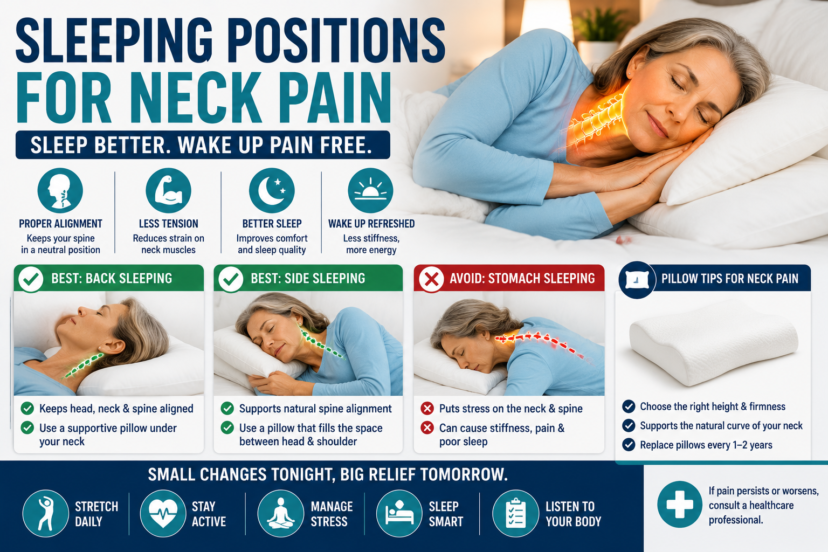
If you asked about the best sleeping positions for neck pain, a good night’s sleep should leave you feeling refreshed, energized, and ready for the day. Unfortunately, many adults wake up with neck stiffness, soreness, headaches, or limited movement that can affect everything from driving to exercising.
In many cases, the problem isn’t what happened during the day—it’s how you slept the night before.
The encouraging news is that improving your sleeping posture may help reduce discomfort and support better neck health over time. Small changes in sleep position, pillow support, and bedtime habits can often lead to noticeable improvements.
If you’re tired of waking up with neck pain, understanding the best sleeping positions for neck pain may help you move more comfortably, stay active, and enjoy a healthier quality of life.
💡 Quick Answer: Sleeping Positions For Neck Pain
The best sleeping positions for neck pain are usually sleeping on your back or side because they help keep the neck aligned with the spine. Stomach sleeping often places excessive stress on the neck and may contribute to stiffness, headaches, and discomfort. A supportive pillow and proper spinal alignment are essential for long-term neck comfort.
Key Takeaways
Most likely cause: Sleeping in a position that places the neck out of alignment, often combined with an unsupportive pillow or poor spinal support during the night.
Usually serious? No. Most sleep-related neck pain improves with better sleeping posture, proper pillow support, and healthy daily movement. Persistent or worsening symptoms should be evaluated by a healthcare professional.
First thing to check: Assess your sleeping position, pillow height and firmness, and whether your neck stays aligned with your spine throughout the night. Also consider whether you regularly wake up with stiffness or pain.
Best solution: Sleep on your back or side with a supportive pillow that keeps your neck in a neutral position, avoid stomach sleeping whenever possible, and combine good sleep posture with regular stretching and strengthening exercises.
🛌 Why Sleeping Position Matters For Neck Health
Your body spends approximately one-third of its life sleeping.
That means your sleeping posture affects your:
- Neck muscles
- Joints
- Ligaments
- Cervical spine
- Overall comfort
If your neck remains twisted or unsupported for several hours, muscles may become strained and joints may become irritated.
Over time, poor sleep posture may contribute to:
- Morning stiffness
- Headaches
- Reduced mobility
- Muscle tension
- Recurring neck pain
Fortunately, better sleeping habits can often help.
⭐ Sleeping Positions For Neck Pain: Back Sleeping
Many experts consider sleeping on your back one of the best options for neck health.
Benefits Of Back Sleeping
Back sleeping may help:
- Maintain spinal alignment
- Reduce pressure on joints
- Minimize neck twisting
- Support healthy posture
When lying on your back, your ears should remain aligned with your shoulders.
Best Pillow For Back Sleepers
Look for a pillow that:
- Supports the natural curve of the neck
- Prevents the head from tilting too far forward
- Isn’t excessively high
Memory foam pillows and cervical pillows are popular choices in the United States.
Popular brands include:
- Tempur-Pedic
- Coop Home Goods
- EPABO Cervical Pillow
🌙 Sleeping Positions For Neck Pain: Side Sleeping
Side sleeping is another excellent option.
Many adults naturally prefer this position.
Benefits Of Side Sleeping
Side sleeping may:
- Keep the spine aligned
- Reduce pressure on the neck
- Improve comfort
- Support healthy posture
Pillow Tips For Side Sleepers
The pillow should fill the space between your head and your shoulder.
Helpful features include:
- Medium firmness
- Proper height
- Good support
Some side sleepers also place a pillow between their knees to improve overall spinal alignment.
🚫 Why Stomach Sleeping Often Causes Neck Pain
Stomach sleeping is generally considered the least favorable position for neck health.
Why It Creates Problems
When sleeping on your stomach:
- The neck remains rotated for hours
- Muscles stay under tension
- Joints experience additional stress
This may lead to:
- Morning stiffness
- Headaches
- Shoulder tension
- Neck soreness
How To Transition Away From Stomach Sleeping
Changing sleeping habits takes time.
Helpful strategies include:
- Using body pillows
- Sleeping with pillows around your body
- Gradually moving to side sleeping
- Practicing consistency
Small changes often become easier with time.
💤 Choosing The Right Pillow Matters
Even the best sleeping position may not help if your pillow doesn’t provide proper support.
Signs Your Pillow May Be Causing Neck Pain
You may notice:
- Waking up stiff
- Frequent headaches
- Shoulder pain
- Restless sleep
When To Replace Your Pillow
Most pillows should be replaced every 1 to 2 years.
Over time, pillows lose:
- Shape
- Support
- Cushioning
Replacing an old pillow may provide surprisingly noticeable improvements.
🔍 Why You Wake Up With Neck Pain
Several factors besides sleep position may contribute to discomfort.
Common causes include:
- Arthritis
- Muscle tension
- Stress
- Poor posture during the day
- Phone neck
- Disc degeneration
- Sleeping with multiple pillows
Identifying contributing factors can help you choose the most effective solutions.
💻 Daytime Posture Affects Nighttime Comfort
Many adults blame their pillows when the real problem begins during the day.
Hours spent:
- Looking at phones
- Working at computers
- Driving
- Sitting
may contribute to forward head posture.
Forward Head Posture And Sleep
Poor posture during the day may cause muscles to remain tight at night.
This may increase:
- Neck stiffness
- Headaches
- Sleep discomfort
Improving posture throughout the day may help improve sleep comfort.
🧘 Stretching Before Bed May Help
Gentle stretching before sleep may reduce muscle tension.
Helpful Stretches
Examples include:
- Chin tucks
- Shoulder rolls
- Side neck stretches
- Upper trapezius stretches
Stretch slowly and avoid painful movements.
Consistency is often more important than intensity.
🌿 Natural Home Remedies For Better Neck Comfort
Many adults prefer conservative approaches for neck pain relief.
Heat Therapy
Heat may help:
- Relax muscles
- Improve circulation
- Reduce stiffness
Options include:
- Heating pads
- Warm showers
- Heat wraps
Massage Therapy
Massage may temporarily reduce:
- Muscle tightness
- Trigger points
- Stress-related tension
Stress Management
Stress can increase muscle tension around the neck and shoulders.
Helpful techniques include:
- Meditation
- Deep breathing
- Walking
- Gentle yoga
💪 Physical Therapy For Persistent Neck Pain
If neck pain keeps returning, physical therapy may help.
A physical therapist can evaluate:
- Sleep posture
- Muscle imbalances
- Flexibility
- Strength
- Movement patterns
Treatment may include:
- Stretching routines
- Strengthening exercises
- Manual therapy
- Ergonomic recommendations
Many people experience significant improvement when the root cause is addressed.
🩺 Sleeping Positions For Neck Pain And Healthy Aging
As we age, changes in the cervical spine become more common.
These may include:
- Arthritis
- Disc degeneration
- Reduced flexibility
Because of these changes, proper sleep support becomes even more important after age 50.
Healthy sleep habits may help support:
- Better mobility
- Improved comfort
- Greater independence
- Higher quality of life
⚠️ When To See A Doctor
Seek medical attention if you experience:
- Severe pain
- Persistent symptoms lasting several weeks
- Weakness in the arms
- Tingling or numbness
- Difficulty walking
- Fever
- Pain following an injury
These symptoms may require professional evaluation.
❓ FAQs: Sleeping Positions For Neck Pain
What are the best sleeping positions for neck pain?
Back sleeping and side sleeping are generally considered the most supportive positions for neck health.
Is stomach sleeping bad for neck pain?
Yes. Stomach sleeping often places excessive stress on the neck because the head remains rotated for long periods.
Can a pillow cause neck pain?
Yes. A pillow that is too high, too low, or worn out may contribute to poor alignment and discomfort.
What type of pillow is best for neck pain?
Many people benefit from memory foam or cervical-support pillows that maintain proper spinal alignment.
Why do I wake up with neck pain every morning?
Common causes include poor sleeping posture, an unsupportive pillow, arthritis, stress, and muscle tension.
How often should I replace my pillow?
Most pillows should be replaced every one to two years.
Can physical therapy help neck pain caused by sleeping?
Yes. Physical therapy may help address posture issues, muscle imbalances, and movement patterns that contribute to recurring symptoms.
🎯 Final Thoughts
Finding the best sleeping positions for neck pain may take some experimentation, but small changes often produce meaningful results.
Focus on:
- Sleeping on your back or side
- Choosing a supportive pillow
- Improving posture throughout the day
- Stretching regularly
- Managing stress
Remember that recovery and improvement rarely happen overnight. Consistency and patience are often the keys to long-term success.
By supporting your neck while you sleep, you may wake up feeling better, move more comfortably, and continue enjoying an active and healthy lifestyle for years to come.
Medical Disclaimer: This article is for informational and educational purposes only and is not intended to diagnose, treat, cure, or prevent any medical condition. Always consult a qualified healthcare professional regarding persistent pain or before beginning any exercise or treatment program.
 Explore more: