Neck Pain At Night: Why Your Neck Pain Gets Worse After Dark
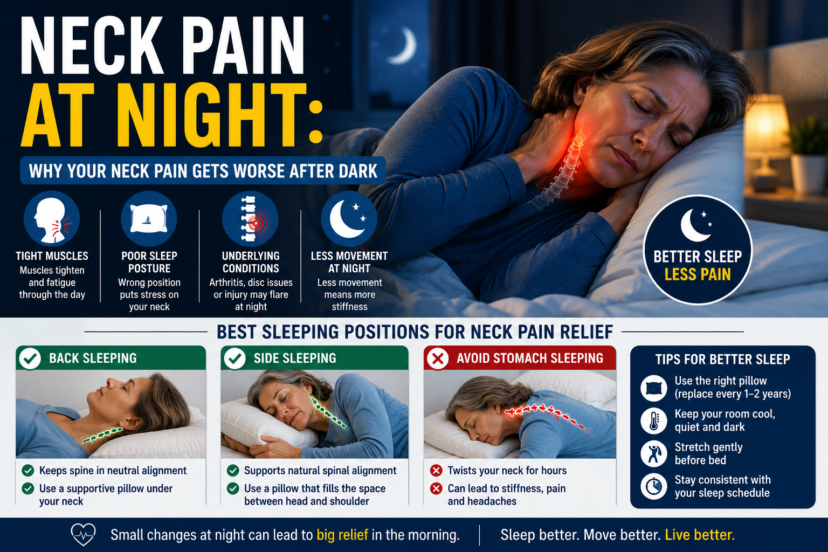
After a long day, most people look forward to relaxing and getting a good night’s sleep. But for many adults, bedtime brings an unexpected problem—neck pain that seems to get worse once the sun goes down. If you’ve noticed increased stiffness, soreness, or discomfort while lying in bed, you’re not alone. Neck pain at night is a common complaint that affects millions of adults and can interfere with sleep quality, daily activities, and overall well-being.
The encouraging news is that nighttime neck discomfort often has identifiable causes. Small adjustments to sleeping position, posture, daily habits, and movement routines may help improve comfort and support healthier sleep.
If you’re tired of waking up feeling stiff or struggling to get comfortable at bedtime, understanding why neck pain worsens at night may help you find practical solutions.
⭐ Quick Answer: Neck Pain At Night
Neck pain at night is commonly caused by poor sleeping posture, unsupportive pillows, arthritis, muscle tension, stress, and reduced movement during sleep. Improving sleep position, supporting the neck properly, staying active during the day, and practicing healthy posture habits may help reduce nighttime discomfort.
Key Takeaways
Most likely cause: Poor sleeping posture, an unsupportive pillow, muscle tension, or age-related changes such as arthritis that become more noticeable when lying down.
Usually serious? No. Most cases of neck pain at night are related to sleep position, muscle strain, or joint stiffness and can often improve with simple lifestyle changes. However, severe, persistent, or worsening pain should be evaluated by a healthcare professional.
First thing to check: Check whether your pillow keeps your neck in a neutral position, consider your sleeping posture, and notice if the pain is worse after a day of prolonged sitting, screen use, or stress.
Best solution: Sleep on your back or side with proper neck support, use a supportive pillow, maintain good posture during the day, stay physically active, and perform gentle neck stretches to reduce muscle tension before bed.
🌙 Why Neck Pain At Night Often Feels Worse
Many people notice that neck discomfort becomes more noticeable once they lie down.
Several factors may contribute:
- Less movement
- Increased awareness of pain
- Muscle tension
- Sleep position problems
- Age-related changes
- Inflammation
During the day, activity and distractions may make discomfort less noticeable. At night, pain may become easier to feel because there are fewer distractions.
🛌 Poor Sleeping Position Is A Common Cause
Your neck remains in the same position for several hours while sleeping.
If alignment is poor, muscles and joints may become irritated.
Sleeping On Your Stomach
Stomach sleeping often causes:
- Neck twisting
- Muscle strain
- Morning stiffness
- Headaches
Because the head remains turned for long periods, this position places extra stress on the cervical spine.
Better Sleeping Positions
Many experts recommend:
- Sleeping on your back
- Sleeping on your side
These positions help maintain better spinal alignment.
💤 Your Pillow May Be Making Neck Pain At Night Worse
Even a good mattress cannot compensate for a poor pillow.
Signs Your Pillow Is The Problem
You may notice:
- Waking up with stiffness
- Frequent headaches
- Shoulder discomfort
- Tossing and turning
Choosing A Better Pillow
Look for a pillow that:
- Supports the natural curve of the neck
- Matches your sleeping position
- Maintains proper height
Popular pillow options in the U.S. include:
- Memory foam pillows
- Cervical pillows
- Adjustable pillows
Many adults find improvement after replacing worn-out pillows.
🦴 Arthritis And Age-Related Changes
Neck pain at night becomes increasingly common after age 50.
Natural aging may contribute to:
- Cervical arthritis
- Disc degeneration
- Joint stiffness
- Reduced flexibility
Why Arthritis Hurts More At Night
During periods of inactivity, joints may become stiffer.
This may explain why some people notice:
- Morning stiffness
- Increased nighttime discomfort
- Reduced mobility
Staying active during the day often helps support joint health.
💻 Poor Daytime Posture Can Affect Nighttime Comfort
Your neck doesn’t suddenly become painful at bedtime.
Often, the strain builds throughout the day.
Common contributors include:
- Looking down at phones
- Computer work
- Driving
- Slouching
Forward Head Posture
Forward head posture increases stress on:
- Neck muscles
- Shoulder muscles
- Cervical joints
Over time, this may contribute to recurring neck pain at night.
😟 Stress And Muscle Tension
Stress can have physical effects on the body.
Many people unconsciously tighten muscles around the:
- Neck
- Shoulders
- Jaw
This tension may remain present while trying to sleep.
Common Symptoms Of Stress-Related Neck Pain
- Tight shoulders
- Tension headaches
- Difficulty relaxing
- Muscle soreness
Reducing stress may help improve comfort and sleep quality.
Helpful strategies include:
- Meditation
- Deep breathing
- Walking
- Gentle yoga
🚶 Lack Of Movement During The Day
Movement plays an important role in maintaining healthy muscles and joints.
Too much sitting may contribute to:
- Tight muscles
- Reduced circulation
- Joint stiffness
- Loss of flexibility
Activities That Support Neck Health
Examples include:
- Walking
- Swimming
- Stretching
- Light strength training
- Yoga
Even short movement breaks throughout the day may help.
🧘 Evening Stretches May Help Reduce Neck Pain At Night
Gentle stretching before bed may help relax muscles and improve mobility.
Helpful Exercises
Chin Tucks
Benefits include:
- Improved posture
- Better neck alignment
- Reduced forward head posture
Shoulder Rolls
Shoulder rolls may help:
- Increase circulation
- Relax tight muscles
- Reduce tension
Side Neck Stretches
These stretches may improve:
- Flexibility
- Range of motion
- Muscle comfort
Always perform exercises slowly and avoid painful movements.
🌿 Natural Home Remedies For Nighttime Neck Pain
Many people prefer conservative approaches before considering medications.
Heat Therapy
Heat may help:
- Relax muscles
- Improve circulation
- Reduce stiffness
Popular options include:
- Heating pads
- Warm showers
- Heat wraps
Massage Therapy
Massage may temporarily relieve:
- Trigger points
- Muscle tightness
- Stress-related tension
Sleep Hygiene
Good sleep habits may improve overall comfort.
Helpful habits include:
- Maintaining a consistent bedtime
- Limiting screen time before bed
- Keeping the bedroom cool and dark
💪 Physical Therapy For Persistent Neck Pain At Night
If symptoms continue despite self-care, physical therapy may help.
A physical therapist can evaluate:
- Posture
- Flexibility
- Muscle imbalances
- Movement patterns
Treatment may include:
- Stretching programs
- Strengthening exercises
- Manual therapy
- Ergonomic recommendations
Many adults experience improvement when the underlying cause is addressed.
🖥️ Ergonomic Changes That Support Better Sleep
Small daytime adjustments may reduce nighttime symptoms.
Improve Computer Posture
Aim for:
- Monitor at eye level
- Relaxed shoulders
- Proper chair support
Reduce Phone Neck
Try to:
- Raise your phone higher
- Take regular breaks
- Avoid prolonged downward viewing
Small habits practiced daily often provide long-term benefits.
⚠️ When To See A Doctor
Seek medical attention if you experience:
- Severe pain
- Persistent symptoms lasting several weeks
- Arm weakness
- Tingling or numbness
- Fever
- Unexplained weight loss
- Pain following an injury
These symptoms may indicate a more serious condition requiring professional evaluation.
❓ FAQs: Neck Pain At Night
Why does my neck pain get worse at night?
Poor sleep posture, arthritis, muscle tension, and reduced movement may contribute to increased discomfort at bedtime.
Can a pillow cause neck pain at night?
Yes. A pillow that lacks support or proper height may increase stress on the neck.
What sleeping position is best for neck pain?
Back sleeping and side sleeping are generally considered the most supportive positions.
Why do I wake up with neck stiffness?
Muscle tension, arthritis, poor posture, and sleeping position may contribute to morning stiffness.
Does arthritis cause neck pain at night?
Yes. Cervical arthritis often becomes more noticeable during periods of inactivity.
Should I use heat or ice before bed?
Heat is commonly used for muscle tension, while ice may be useful following an acute injury.
Can physical therapy help nighttime neck pain?
Yes. Physical therapy may help improve posture, mobility, and muscle balance.
🌟 Final Thoughts
Neck pain at night can be frustrating, especially when it interferes with restful sleep. Fortunately, many causes are manageable through simple lifestyle changes.
Focus on what you can control:
- Improve sleep posture
- Choose a supportive pillow
- Stay active during the day
- Stretch regularly
- Manage stress
- Support healthy posture habits
Remember that meaningful improvements usually happen gradually. Consistency and patience are often the keys to long-term success.
By supporting your neck throughout the day and night, you may enjoy better sleep, improved mobility, and a healthier, more active lifestyle.
Medical Disclaimer: This article is for educational and informational purposes only and is not intended to diagnose, treat, cure, or prevent any disease or medical condition. Always consult a qualified healthcare professional regarding persistent pain or before beginning any exercise or treatment program.
 Explore more: