Neck Pain On One Side Only? Discover The Common Causes And What It Could Mean
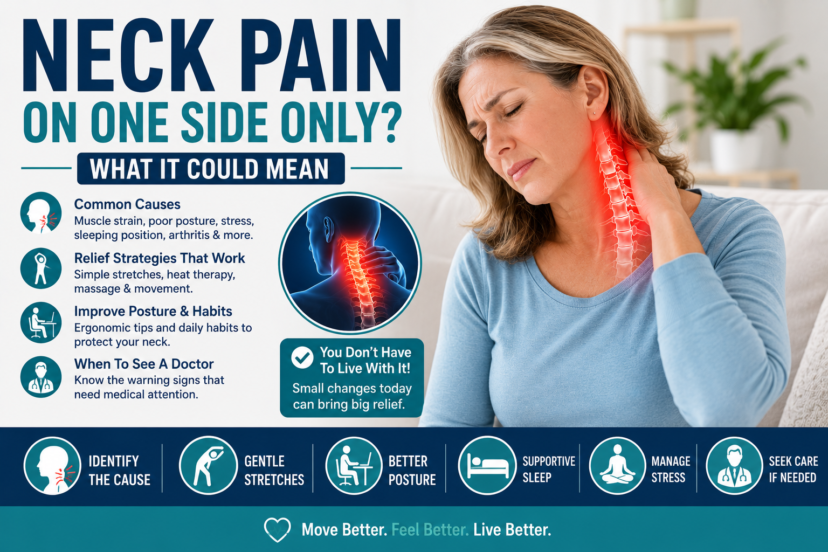
Have you ever turned your head and noticed pain only on the left side or right side of your neck? One-sided neck pain can feel confusing, especially when the discomfort appears suddenly or keeps returning. The good news is that neck pain on one side is extremely common and often has simple explanations. In many cases, muscle tension, sleeping positions, poor posture, stress, or everyday habits are responsible.
While occasional neck discomfort is common, understanding the possible causes can help you make smart decisions, improve mobility, and support long-term neck health.
If you’re hoping to move more comfortably, stay active, and maintain your independence as you age, learning what may be causing your symptoms is the first step toward relief.
⭐ Quick Answer: Neck Pain On One Side
Neck pain on one side is commonly caused by muscle strain, poor sleeping posture, stress, arthritis, pinched nerves, or repetitive movements. Most cases improve with rest, stretching, posture correction, and healthy movement habits, although persistent or severe symptoms should be evaluated by a healthcare professional.
Key Takeaways
Most likely cause: Muscle strain, poor sleeping posture, prolonged poor posture, or repetitive daily activities that place extra stress on one side of the neck.
Usually serious? No. Most cases of one-sided neck pain are caused by muscle or joint irritation and improve with simple self-care. However, severe, persistent, or worsening pain—especially with numbness, weakness, or pain radiating down the arm—should be evaluated by a healthcare professional.
First thing to check: Think about your recent sleeping position, workstation setup, phone use, recent physical activity, and whether the pain began after an awkward movement or prolonged time in one position.
Best solution: Improve your posture, use a supportive pillow, take regular movement breaks, perform gentle neck stretches, strengthen your neck and upper back muscles, and avoid staying in one position for long periods.
🔍 Common Causes Of Neck Pain On One Side
There are many reasons why discomfort may affect only one side of the neck.
Muscle Strain
Muscle strain is one of the most common causes.
It can occur from:
- Looking down at your phone
- Working at a computer
- Lifting heavy objects
- Sudden movements
- Poor posture
Muscles on one side may become tighter than the other, leading to uneven stress and discomfort.
Sleeping In An Awkward Position
A poor sleeping position may leave you waking up with pain on one side of your neck.
Common culprits include:
- Sleeping with too many pillows
- Using an old pillow
- Sleeping with your head twisted
- Stomach sleeping
Many people notice improvement after adjusting their sleep setup.
🛌 Neck Pain On One Side After Sleeping
Waking up with one-sided neck pain is extremely common.
Why It Happens
Sleeping in the same position for several hours may place stress on:
- Muscles
- Ligaments
- Joints
- Tendons
As a result, you may experience:
- Morning stiffness
- Pain when turning your head
- Limited mobility
- Muscle tightness
How To Prevent It
Helpful strategies include:
- Using a supportive pillow
- Sleeping on your back or side
- Avoiding stomach sleeping
- Replacing worn-out pillows
Good sleep posture can make a major difference.
💻 Poor Posture Can Cause Neck Pain On One Side
Modern lifestyles often contribute to neck discomfort.
Hours spent:
- Looking at phones
- Using computers
- Driving
- Watching television
may gradually lead to muscle imbalances.
Forward Head Posture
Forward head posture places extra stress on the cervical spine.
Over time, this may cause:
- Neck stiffness
- Headaches
- Shoulder tension
- One-sided discomfort
Simple posture improvements may help reduce strain.
😟 Stress And Muscle Tension
Stress affects more than mental health.
Many people unconsciously tighten muscles in the:
- Neck
- Shoulders
- Jaw
- Upper back
This tension may affect one side more than the other.
Signs Of Stress-Related Neck Pain
Symptoms may include:
- Tight muscles
- Tension headaches
- Shoulder soreness
- Difficulty relaxing
Stress-management techniques such as meditation, walking, and deep breathing may help reduce muscle tension.
🦴 Arthritis And Age-Related Changes
Neck pain on one side becomes more common after age 50.
Natural wear and tear may contribute to:
- Cervical arthritis
- Disc degeneration
- Joint stiffness
- Reduced flexibility
These changes don’t always cause pain, but they can increase sensitivity in certain areas of the neck.
Common Symptoms
- Morning stiffness
- Aching discomfort
- Reduced mobility
- Pain during certain movements
Remaining active often helps support long-term neck health.
⚡ Pinched Nerves And Radiating Pain
Sometimes, irritation of a nerve in the neck may cause pain on only one side.
Symptoms may include:
- Burning pain
- Tingling
- Numbness
- Weakness in the arm
- Pain that travels into the shoulder
A pinched nerve should be evaluated by a healthcare professional if symptoms persist.
🚶 Lack Of Movement Makes Symptoms Worse
Many adults spend hours sitting every day.
Prolonged inactivity may contribute to:
- Tight muscles
- Poor circulation
- Reduced flexibility
- Increased stiffness
Movement remains one of the best tools for healthy aging.
Activities That May Help
Examples include:
- Walking
- Swimming
- Stretching
- Yoga
- Light strength training
Even small amounts of movement throughout the day may improve comfort.
🧘 Stretches That May Help Neck Pain On One Side
Gentle stretching can improve flexibility and reduce muscle tightness.
Upper Trapezius Stretch
This stretch targets muscles commonly affected by one-sided neck pain.
Chin Tucks
Benefits include:
- Improved posture
- Better neck alignment
- Reduced forward head posture
Shoulder Rolls
Shoulder rolls may help:
- Increase circulation
- Relax tight muscles
- Reduce stiffness
Always move slowly and avoid painful positions.
🌿 Natural Home Remedies For Neck Pain Relief
Many people find relief with conservative approaches.
Heat Therapy
Heat may help:
- Relax muscles
- Improve circulation
- Reduce stiffness
Popular options include:
- Heating pads
- Warm showers
- Heat wraps
Massage Therapy
Massage may temporarily reduce:
- Trigger points
- Muscle tension
- Stress-related tightness
Hydration
Proper hydration supports:
- Muscle function
- Tissue recovery
- Overall wellness
🩺 Physical Therapy For Recurring Neck Pain
Physical therapy may be beneficial if symptoms keep returning.
A physical therapist can evaluate:
- Posture
- Strength
- Mobility
- Muscle imbalances
Treatment often includes:
- Stretching exercises
- Strength training
- Manual therapy
- Ergonomic guidance
Many adults experience improvement when underlying causes are addressed.
🖥️ Ergonomic Tips To Prevent Neck Pain
Small adjustments can reduce stress on the neck.
Improve Your Workspace
Aim for:
- Monitor at eye level
- Relaxed shoulders
- Good chair support
- Feet flat on the floor
Reduce Phone Neck
Instead of lowering your head:
- Raise your phone higher
- Take frequent breaks
- Change positions regularly
Consistency matters more than perfection.
⚠️ When To See A Doctor
Most cases improve with conservative care, but certain symptoms require medical evaluation.
Seek professional care if you experience:
- Severe pain
- Symptoms lasting several weeks
- Arm weakness
- Tingling or numbness
- Fever
- Unexplained weight loss
- Difficulty walking
- Pain following an accident or fall
These symptoms may indicate a more serious condition.
❓ FAQs: Neck Pain On One Side Only
Why do I have neck pain on one side only?
Muscle strain, poor posture, sleeping positions, stress, arthritis, and nerve irritation are common causes.
Can stress cause pain on only one side of the neck?
Yes. Muscle tension may affect one side more than the other.
Is one-sided neck pain serious?
Most cases are not serious, but persistent pain or neurological symptoms should be evaluated by a healthcare professional.
Can a pillow cause neck pain on one side?
Yes. Poor pillow support may contribute to uneven neck positioning during sleep.
Why does my neck hurt when I turn my head?
Muscle tightness, joint stiffness, or inflammation may make certain movements painful.
Should I use heat or ice?
Heat is often helpful for muscle tension, while ice may help after a recent strain or injury.
Can physical therapy help one-sided neck pain?
Yes. Physical therapy can address posture, strength deficits, and movement patterns that contribute to recurring symptoms.
🎯 Final Thoughts
Neck pain on one side can be frustrating, but most cases have manageable causes. Whether the problem comes from posture, stress, sleeping habits, or age-related changes, small adjustments often lead to meaningful improvements.
Focus on what you can control:
- Stay active
- Stretch regularly
- Improve posture
- Support healthy sleep habits
- Manage stress
Remember that recovery often takes time. Consistency and patience are usually more important than quick fixes.
With the right habits, many adults can reduce discomfort, improve mobility, and continue enjoying active, healthy lives with greater comfort and confidence.
Medical Disclaimer: This article is for informational and educational purposes only and is not intended to diagnose, treat, cure, or prevent any disease or medical condition. Always consult a qualified healthcare professional regarding persistent pain or before beginning any new exercise or treatment program.
 Explore more: