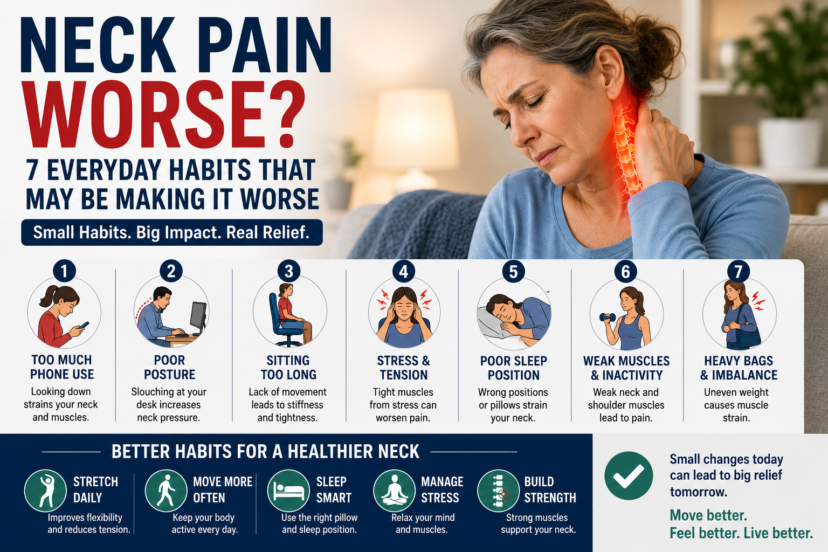
Neck Pain Worse? 7 Everyday Habits That May Be Making It Worse
Is your neck pain worse? Many adults assume neck pain is simply part of getting older. But in many cases, the real problem isn’t age—it’s the small daily habits we repeat without even realizing it.
From looking down at your phone to sleeping with the wrong pillow, certain behaviors may slowly increase stress on your neck over time. What seems harmless today may eventually lead to stiffness, headaches, reduced mobility, and chronic discomfort.
The good news is that many of these habits are fixable.
Small changes often produce surprisingly meaningful results. By improving posture, moving more frequently, and supporting your neck properly, you may reduce discomfort and enjoy a healthier, more active lifestyle.
If your neck pain is worse than it used to be, these seven habits may be contributing to the problem.
⭐ Quick Answer: Neck Pain Worse
If your neck pain is worse than before, everyday habits such as poor posture, prolonged phone use, lack of movement, stress, poor sleep positions, and weak muscles may be contributing factors. Improving these habits may help support long-term neck comfort and mobility.
Key Takeaways
Most likely cause: Poor posture, prolonged screen time, lack of movement, muscle tension, poor sleeping habits, or other everyday behaviors that place repeated stress on the neck.
Usually serious? No. Neck pain that gradually worsens is often related to lifestyle habits and muscle or joint strain. However, persistent, severe, or rapidly worsening pain—especially with numbness, weakness, or pain radiating into the arm—should be evaluated by a healthcare professional.
First thing to check: Review your daily routine, including your posture at work, phone and computer use, sleeping position, pillow support, stress levels, and how often you take movement breaks.
Best solution: Correct poor posture, limit prolonged screen time, take frequent movement breaks, perform regular neck and upper back stretching and strengthening exercises, use a supportive pillow, and maintain healthy daily habits that reduce strain on your neck.
🔍 Why Daily Habits Matter More Than You Think
Most neck problems don’t appear overnight.
Instead, they often develop gradually through repeated stress placed on the:
- Muscles
- Joints
- Ligaments
- Cervical spine
Small strains repeated over months or years may eventually lead to noticeable discomfort.
Fortunately, small improvements repeated daily can also help support recovery.
📱 Habit #1: Looking Down At Your Phone Too Often
Phone use has become one of the biggest causes of modern neck discomfort.
Looking downward for long periods may increase stress on neck muscles.
Why Phone Neck Happens
When your head moves forward:
- Muscles work harder
- Joints experience additional stress
- Shoulder tension increases
Over time, this may make neck pain worse.
Better Habits
Try to:
- Raise your phone closer to eye level
- Take regular breaks
- Change positions frequently
Even simple adjustments may help.
💻 Habit #2: Poor Computer Posture
Millions of Americans spend hours sitting in front of screens every day.
Poor posture may lead to:
- Forward head posture
- Tight shoulders
- Headaches
- Reduced mobility
Improve Your Workstation
Helpful changes include:
- Monitor at eye level
- Relaxed shoulders
- Feet flat on the floor
- Good lumbar support
Proper ergonomics may reduce stress on the neck.
🚶 Habit #3: Sitting Too Much
The body was designed to move.
Long periods of inactivity may contribute to:
- Muscle tightness
- Reduced circulation
- Joint stiffness
- Weakness
Move More Throughout The Day
Examples include:
- Walking
- Stretching
- Standing breaks
- Light exercise
Even five-minute movement breaks may help.
😟 Habit #4: Letting Stress Build Up
Stress affects the body physically.
Many people unconsciously tighten muscles around the:
- Neck
- Shoulders
- Jaw
- Upper back
This tension may gradually make neck pain worse.
Signs Of Stress-Related Muscle Tension
You may notice:
- Tight shoulders
- Tension headaches
- Difficulty relaxing
- Muscle soreness
Healthy Stress Relief Strategies
Consider:
- Deep breathing
- Meditation
- Walking
- Gentle yoga
- Listening to calming music
Reducing stress may improve both comfort and sleep quality.
🛌 Habit #5: Sleeping In Poor Positions
Your body spends many hours in the same position while sleeping.
Poor alignment during sleep may contribute to:
- Morning stiffness
- Headaches
- Shoulder discomfort
- Neck soreness
Avoid Stomach Sleeping
Stomach sleeping often twists the neck for several hours.
Many experts recommend:
- Back sleeping
- Side sleeping
Replace Old Pillows
Most pillows lose support over time.
A supportive pillow may help maintain proper neck alignment.
💪 Habit #6: Weak Muscles And Lack Of Exercise
Muscles help support the cervical spine.
Weak muscles may increase strain on:
- Neck joints
- Ligaments
- Tendons
Exercises That Support Neck Health
Examples include:
- Walking
- Resistance training
- Yoga
- Stretching exercises
Stronger muscles often improve posture and mobility.
🎒 Habit #7: Carrying Heavy Bags Incorrectly
Heavy purses, backpacks, and shoulder bags may place uneven stress on the body.
This may lead to:
- One-sided neck pain
- Shoulder tension
- Muscle fatigue
Smarter Carrying Habits
Try to:
- Alternate sides
- Reduce unnecessary weight
- Use backpacks with both straps
Balanced weight distribution may help protect the neck.
🧘 Daily Stretches That May Help
Stretching may improve flexibility and reduce tension.
Chin Tucks
Benefits include:
- Better posture
- Improved alignment
- Reduced forward head position
Shoulder Rolls
Shoulder rolls may:
- Increase circulation
- Relax muscles
- Reduce stiffness
Side Neck Stretches
Gentle stretching may help improve mobility and flexibility.
Always avoid painful movements.
🌿 Natural Home Remedies For Neck Pain Relief
Many adults prefer conservative approaches.
Heat Therapy
Heat may help:
- Relax muscles
- Improve circulation
- Reduce stiffness
Popular options include:
- Heating pads
- Warm showers
- Heat wraps
Massage Therapy
Massage may temporarily reduce:
- Trigger points
- Muscle tightness
- Stress-related tension
Hydration
Proper hydration supports:
- Muscle function
- Tissue recovery
- Overall wellness
🩺 Physical Therapy For Persistent Symptoms
If your neck pain worse despite lifestyle changes, physical therapy may help.
A physical therapist can evaluate:
- Posture
- Strength
- Flexibility
- Movement patterns
Treatment often includes:
- Stretching exercises
- Strength training
- Manual therapy
- Ergonomic education
Many adults experience meaningful improvements through targeted rehabilitation.
⚠️ When To See A Doctor
Seek medical attention if you experience:
- Severe pain
- Symptoms lasting several weeks
- Tingling or numbness
- Arm weakness
- Fever
- Difficulty walking
- Pain following an injury
These symptoms may require professional evaluation.
❓ FAQs: Neck Pain Worse
Why does my neck pain keep getting worse?
Poor posture, lack of movement, stress, sleeping habits, and repetitive strain are common contributors.
Can looking at my phone make neck pain worse?
Yes. Prolonged downward viewing may increase stress on the cervical spine.
Can stress affect neck pain?
Yes. Stress often causes muscle tension around the neck and shoulders.
What sleeping position is best for neck pain?
Back sleeping and side sleeping generally provide better support than stomach sleeping.
How often should I stretch my neck?
Gentle daily stretching may help improve flexibility and mobility.
Can physical therapy help chronic neck pain?
Yes. Physical therapy may help address posture, strength, and movement problems contributing to pain.
Is neck pain a normal part of aging?
Mild stiffness becomes more common with age, but severe or persistent pain should not be ignored.
📌 Final Thoughts
If your neck pain is worse than it used to be, don’t overlook the small habits you repeat every day.
Simple improvements such as:
- Better posture
- More movement
- Healthier sleep habits
- Stress management
- Strength training
may provide meaningful benefits over time.
Remember that long-term neck health is built through consistency, not quick fixes.
Small changes today may help you move better, stay active longer, and enjoy a healthier and more comfortable future.
Medical Disclaimer: This article is for informational and educational purposes only and is not intended to diagnose, treat, cure, or prevent any disease or medical condition. Always consult a qualified healthcare professional regarding persistent pain or before beginning any exercise or treatment program.
 Explore more: