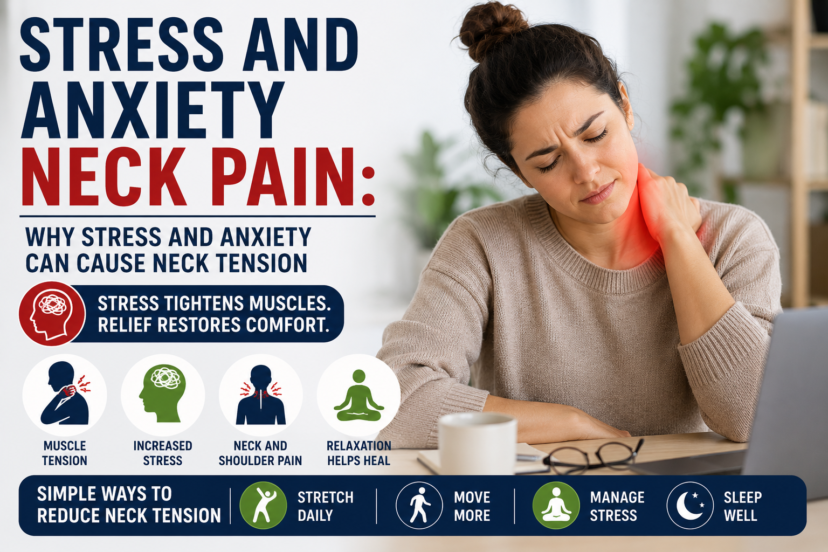
Stress And Anxiety Neck Pain: Why Stress And Anxiety Can Cause Neck Tension
Modern life can feel overwhelming. Between work demands, family responsibilities, financial concerns, and everyday pressures, many adults carry more stress than ever before. Unfortunately, emotional stress doesn’t just affect the mind—it can also affect the body. If you’ve ever noticed tight shoulders, stiffness at the base of your neck, tension headaches, or aching muscles after a stressful day, you’re not imagining it. Stress and anxiety neck pain is a real and surprisingly common problem.
The good news is that understanding the connection between stress and physical discomfort may help you take steps toward relief. Small lifestyle changes, movement habits, stress-management techniques, and posture improvements may help support long-term neck comfort and overall well-being.
Whether you’re experiencing occasional tightness or ongoing muscle tension, there are practical strategies that may help you move more comfortably and enjoy a healthier, more active life.
⭐ Quick Answer: Stress And Anxiety Neck Pain
Stress and anxiety neck pain often occur because emotional stress causes muscles in the neck and shoulders to tighten. Relaxation techniques, stretching, regular movement, quality sleep, and healthy lifestyle habits may help reduce tension and improve neck comfort.
Key Takeaways
Most likely cause: Muscle tension triggered by stress and anxiety, often combined with poor posture, prolonged sitting, and shallow breathing that increase strain on the neck and shoulders.
Usually serious? No. Stress-related neck pain is commonly caused by tight muscles and often improves with stress management, regular movement, and healthy lifestyle habits. Persistent, severe, or worsening symptoms should be evaluated by a healthcare professional.
First thing to check: Notice whether your neck pain becomes worse during stressful periods, after long hours at a desk, or when you feel anxious, and pay attention to muscle tightness in your neck and shoulders.
Best solution: Practice relaxation techniques, stretch your neck and shoulders regularly, improve your posture, stay physically active, prioritize quality sleep, and manage daily stress to help reduce muscle tension and support long-term neck comfort.
🧠 How Stress And Anxiety Neck Pain Happens
When you experience stress, your body activates its natural “fight-or-flight” response.
This response can cause:
- Muscle tightening
- Increased heart rate
- Faster breathing
- Elevated stress hormones
- Physical tension throughout the body
The neck and shoulders are among the most common areas where stress-related tension accumulates.
Over time, constantly tense muscles may lead to:
- Neck stiffness
- Shoulder pain
- Reduced mobility
- Tension headaches
- Upper back discomfort
Stress and anxiety neck pain can become a cycle because physical discomfort may increase emotional stress, which can create even more muscle tension.
😟 Common Symptoms Of Stress And Anxiety Neck Pain
Symptoms vary from person to person.
Common complaints include:
- Tight neck muscles
- Aching shoulders
- Pain at the base of the skull
- Headaches
- Limited range of motion
- Upper back tightness
- Muscle soreness
- Jaw tension
Many people notice symptoms worsen during stressful periods or improve during vacations and relaxing weekends.
💪 Why Stress Often Affects The Neck And Shoulders
The trapezius muscles connect the neck, shoulders, and upper back.
These muscles naturally respond to stress.
People often:
Raise Their Shoulders Unconsciously
Stress can cause muscles to remain partially contracted throughout the day.
Clench Their Jaw
Jaw tension may contribute to neck discomfort.
Sit With Poor Posture
Stress frequently leads to slouching or forward head posture.
Breathe Shallowly
Shallow breathing may increase muscle tension in the chest, neck, and shoulders.
These habits can gradually contribute to stress and anxiety neck pain.
🧘 Neck Stretches That May Help Relieve Stress Tension
Gentle stretching may help improve flexibility and reduce muscle tightness.
Upper Trapezius Stretch
Tilt your head toward one shoulder and hold for 20 to 30 seconds.
Chin Tucks
Chin tucks help support posture and strengthen deep neck muscles.
Neck Rotations
Slowly turn your head side to side without forcing movement.
Shoulder Rolls
Rolling the shoulders may reduce tension and improve circulation.
Doorway Chest Stretch
Opening tight chest muscles can help counteract rounded shoulders.
Perform stretches gently and stop if pain increases.
🚶 Why Movement Helps Stress And Anxiety Neck Pain
Physical activity may help both the body and mind.
Regular movement can:
- Improve circulation
- Reduce muscle stiffness
- Lower stress levels
- Promote better sleep
- Support overall mobility
Simple activities include:
- Walking
- Swimming
- Yoga
- Stretching routines
- Light strength training
Even short walks throughout the day may help relieve tension.
🪑 How Poor Posture Makes Neck Tension Worse
Stress often contributes to poor posture.
Common posture problems include:
Forward Head Posture
Looking down at phones or computers increases stress on neck muscles.
Rounded Shoulders
Slouching may increase upper back and neck tension.
Sitting For Long Periods
Extended sitting can contribute to stiffness and reduced mobility.
Improving posture may help make stress and anxiety neck pain easier to manage.
😴 Sleep Habits That Support Neck Comfort
Sleep and stress are closely connected.
Poor sleep may increase:
- Muscle tension
- Fatigue
- Anxiety levels
- Pain sensitivity
Helpful habits include:
Using A Supportive Pillow
Proper support helps maintain spinal alignment.
Sleeping On Your Back Or Side
These positions generally place less stress on the neck.
Creating A Relaxing Bedtime Routine
Reading, meditation, or gentle stretching may promote better sleep.
Avoiding Screens Before Bed
Reducing screen time may support healthy sleep quality.
🌿 Natural Stress Relief Strategies
Managing emotional stress may help reduce physical symptoms.
Helpful techniques include:
Deep Breathing Exercises
Slow breathing can calm the nervous system.
Meditation
Many studies suggest meditation may help reduce stress.
Yoga
Yoga combines movement with relaxation.
Spending Time Outdoors
Nature and fresh air may improve mood and reduce tension.
Listening To Relaxing Music
Music may help decrease stress responses.
These strategies may complement neck stretches and posture improvements.
💆 Massage And Physical Therapy Options
Persistent stress and anxiety neck pain sometimes benefits from professional treatment.
Physical therapists may recommend:
- Strengthening exercises
- Mobility training
- Posture correction
- Manual therapy
- Ergonomic modifications
Massage therapy may also help relax tight muscles and improve circulation.
🥗 Lifestyle Habits That Support Healthy Muscles
Healthy habits support both physical and emotional wellness.
Consider:
- Drinking plenty of water
- Walking daily
- Eating nutritious foods
- Maintaining healthy posture
- Limiting prolonged sitting
- Managing stress regularly
Many Americans use magnesium supplements, omega-3 fish oil, and vitamin D supplements. Always consult your healthcare provider before beginning supplements.
⚠️ When To See A Doctor
Seek medical care if symptoms:
- Persist for several weeks
- Continue worsening
- Cause weakness
- Produce numbness or tingling
- Radiate into the arms
- Follow an injury or accident
- Interfere with daily activities
- Occur with severe headaches or fever
A professional evaluation can help identify underlying causes.
❓ FAQs: Stress And Anxiety Neck Pain
Can Stress Really Cause Neck Pain?
Yes. Stress commonly causes muscles in the neck and shoulders to tighten.
Why Does Anxiety Make My Neck Feel Tight?
Anxiety activates the body’s stress response, which may increase muscle tension.
Can Stress Cause Neck Pain And Headaches?
Yes. Tension headaches often occur alongside neck tightness.
How Can I Relax Tight Neck Muscles From Stress?
Stretching, walking, massage, meditation, and relaxation exercises may help.
Can Poor Sleep Make Neck Tension Worse?
Yes. Lack of quality sleep may increase pain sensitivity and muscle tightness.
Is Exercise Good For Stress And Anxiety Neck Pain?
Regular movement may help reduce stress and support mobility.
Should I See A Physical Therapist For Stress-Related Neck Pain?
Physical therapy may help if symptoms persist or repeatedly return.
📌 Conclusion: Stress And Anxiety Neck Pain
Stress and anxiety neck pain is common, but it does not have to control your life.
Understanding the connection between emotional stress and physical tension can help you make smarter choices for long-term comfort.
Simple daily habits—such as stretching, moving regularly, improving posture, sleeping well, and managing stress—may gradually reduce neck tension and improve quality of life.
Progress often takes time. Stay consistent, be patient with yourself, and remember that small changes performed regularly often lead to the greatest long-term improvements.
Medical Disclaimer
This article is for educational purposes only and does not constitute medical advice, diagnosis, or treatment. Always consult a qualified healthcare professional regarding persistent pain or before beginning any exercise, stretching, or wellness program.
 Explore more: