
Reading In Bed Neck Pain: Why This Relaxing Habit Can Leave Your Neck Stiff And Sore
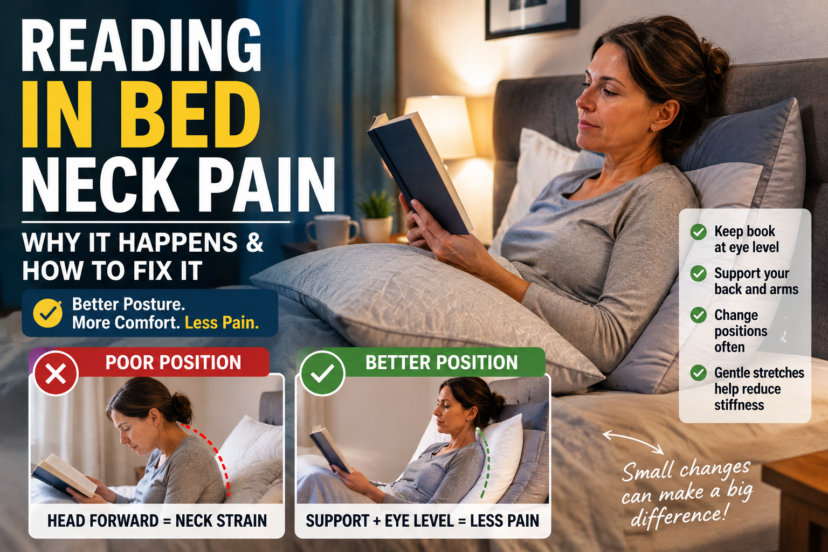
Reading in bed should be one of the most relaxing parts of your day. But if you put down your book or tablet and notice a stiff neck, aching shoulders, or discomfort when turning your head, your reading position may be working against you. Reading in bed neck pain often develops because the head and neck remain bent or unsupported for longer than you realize.
This can become more noticeable as you get older, especially if you already spend much of your day looking at computers or phones. Fortunately, you probably don’t have to give up your evening reading routine.
Small changes to pillow support, book height, reading position, and the length of your reading sessions can reduce unnecessary strain. Combine those adjustments with gentle movement and healthy daytime habits, and you can make reading more comfortable while supporting long-term neck mobility.
📖 Quick Answer: Reading In Bed Neck Pain
Reading in bed neck pain commonly happens when your head stays bent forward, tilted, or rotated for an extended period. Sitting against pillows that collapse behind you can make the problem worse. Raise your book or tablet closer to eye level, support your upper back and arms, keep your neck relatively neutral, and change positions regularly. Gentle movement after reading may also reduce stiffness.
Key Takeaways
Most likely cause: Holding your head forward or downward for too long while reading, often combined with inadequate upper-back and arm support.
Usually serious? Usually not. Occasional stiffness after reading is commonly related to prolonged positioning or muscle fatigue, although persistent or worsening symptoms deserve medical evaluation.
First thing to check: Look at where your book, phone, or tablet sits in relation to your eyes and whether your pillows are actually supporting your upper back and neck.
Best solution: Reduce reading in bed neck pain by bringing reading material higher, supporting your arms and upper body, changing positions frequently, and using gentle mobility exercises.
🧠 Why Reading In Bed Can Cause Neck Pain
Your head is relatively heavy, and your neck muscles constantly work to support it.
When your head stays reasonably balanced over your shoulders, the muscles and joints can share that workload more comfortably. But many common reading positions move the head away from this neutral position.
Imagine sitting in bed with two soft pillows behind your head and your book resting near your stomach.
Your upper back may gradually slide forward while your chin moves toward your chest. Instead of simply looking down with your eyes, your entire head remains flexed.
That position isn’t automatically harmful. The bigger issue is time.
Reading for a few minutes may cause no problem. Holding the same position through several chapters can contribute to muscle fatigue and stiffness.
This is one reason reading in bed neck pain may become more noticeable after a long reading session.
🛏️ 1. Your Pillows May Be Pushing Your Head Forward
Adding more pillows sounds like an obvious solution to uncomfortable reading.
Unfortunately, piling several pillows directly behind your head can create the opposite effect.
Your head may be pushed forward while your upper back remains relatively flat. Your chin then moves toward your chest.
Instead of stacking pillows only behind your head, focus on supporting your entire upper body.
Build A Better Reading Position
Try placing supportive pillows behind your:
- Lower back.
- Mid and upper back.
- Shoulders.
Then use a smaller pillow when needed to support the natural position of your head and neck.
A wedge pillow or adjustable reading pillow may also be useful if it allows your torso to remain comfortably elevated without forcing your neck forward.
The goal isn’t to buy a special pillow. The goal is to support your body so your neck doesn’t have to do all the work.
📱 2. You’re Holding Your Book Or Tablet Too Low
Where you hold your reading material matters.
Books, phones, e-readers, and tablets are often placed in the lap because this feels easier on the arms.
Unfortunately, that usually means looking downward.
Over time, the muscles at the back of your neck may become tired from supporting the head in that position.
A simple way to reduce reading in bed neck pain is to bring the material toward your eyes rather than bringing your head toward the material.
Try raising your book, Kindle, or tablet higher.
A pillow placed across your lap can support your elbows and reduce the effort required to hold the device.
Tablet stands and adjustable book holders are another inexpensive option widely available in the U.S., particularly if you read for an hour or more each night.
🪑 3. You’re Slouching Down As You Read
You may begin your reading session sitting upright.
Twenty minutes later, you’re halfway down the bed.
This gradual sliding is easy to miss.
As your pelvis slides forward, your upper back rounds and your head moves forward. Eventually, you may be supporting your head with a pillow while your neck remains sharply flexed.
Check your position periodically.
If you notice yourself sliding downward, reset.
Sit up, reposition the pillows, and bring your reading material back toward eye level.
Changing your position doesn’t mean your original posture was necessarily “bad.” It simply prevents one position from becoming prolonged enough to create unnecessary discomfort.
😴 4. Reading While Lying Flat Can Twist Your Neck
Some people read while lying completely flat on their back.
Others lie on one side.
Both positions can become uncomfortable depending on where the book or device is placed.
When lying on your back, holding a book near your chest can encourage substantial neck flexion.
Side reading creates a different challenge. You may rotate or tilt your neck to keep your eyes aligned with the page.
If reading in bed neck pain regularly occurs when you read lying down, try switching to a supported, semi-reclined position.
Elevating your torso can make it easier to keep the book in your natural line of sight.
⏰ 5. You’re Reading For Too Long Without Changing Positions
Even a comfortable reading position can eventually become uncomfortable.
Your body likes movement and variation.
Think about how often you change positions naturally during the day. You walk, stand, reach, sit, and turn.
In bed, however, you might remain nearly motionless for an hour.
If you enjoy long reading sessions, build movement into the routine.
Every 20–30 minutes, consider:
- Lowering the book.
- Relaxing your arms.
- Rolling your shoulders.
- Gently turning your head.
- Repositioning your pillows.
- Standing or walking briefly if you’re particularly stiff.
You don’t need to set a timer if that makes reading feel like work. Simply use the end of a chapter as a reminder to reset your position.
👓 6. Your Vision May Be Changing Your Neck Position
Sometimes the problem isn’t your bed.
It’s your eyes.
If text is difficult to read, you may unconsciously move your head closer to the page or tilt your neck to see through a particular part of your glasses.
This can become especially relevant with bifocals or progressive lenses.
You may extend or flex your neck to find the clearest viewing angle.
If you repeatedly catch yourself moving your head into uncomfortable positions to read, consider having your vision and reading prescription checked by an optometrist or ophthalmologist.
Increasing the text size on an e-reader or tablet can also help you maintain a more comfortable viewing distance.
📚 7. You’re Supporting The Book With Your Neck Instead Of Your Arms
A hardcover novel or large tablet can become surprisingly heavy after 30 minutes.
As your arms fatigue, the book gradually drops.
Then your neck follows it.
Support your arms so they don’t have to hold the full weight of the reading material.
Place pillows underneath your elbows or across your lap.
An adjustable tablet stand can be particularly helpful for people with arthritis, shoulder discomfort, or limited upper-body endurance.
This small ergonomic change may reduce strain on your neck, shoulders, wrists, and hands at the same time.
🤸 Gentle Exercises After Reading In Bed
If you feel stiff after reading, aggressive stretching usually isn’t necessary.
Start with gentle movement.
Neck Rotation
Sit comfortably and slowly turn your head toward one side.
Return to the center.
Repeat on the opposite side.
Stay within a comfortable range rather than forcing your chin toward your shoulder.
Gentle Side Bending
Slowly bring one ear toward the same-side shoulder without lifting the shoulder.
Return to center and repeat on the other side.
Shoulder Rolls
Slowly roll your shoulders backward several times.
This can provide a pleasant movement break after you’ve spent time holding a book or tablet.
Shoulder Blade Squeeze
Gently bring your shoulder blades toward each other without aggressively arching your lower back.
Hold briefly and relax.
These movements shouldn’t produce sharp pain.
Stop if you experience significant pain, numbness, weakness, dizziness, or symptoms traveling into your arm.
🌿 Natural Ways To Relieve Neck Stiffness After Reading
If reading in bed causes neck pain that feels muscular and mild, several simple comfort strategies may help.
Try Gentle Heat
A warm shower or heating pad may temporarily relax tight neck and shoulder muscles.
Use moderate temperatures and protect your skin. Don’t fall asleep on a heating pad.
Walk For A Few Minutes
Walking moves more than your legs. Your shoulders and upper body naturally move as well, making a short walk a simple way to loosen up after prolonged sitting.
Change Positions During The Day
Your evening reading position may only be part of the problem.
If you already spent eight hours looking at a computer followed by another hour using your phone, your neck may enter bedtime already fatigued.
Movement breaks throughout the day may therefore improve how you feel at night.
Prioritize Sleep
Reading can be an excellent way to wind down, but avoid allowing long reading sessions to consistently reduce your total sleep time.
Quality sleep plays an important role in overall health, recovery, and pain management.
💪 Strengthening May Help Reduce Recurring Neck Discomfort
If you regularly experience neck fatigue, don’t focus exclusively on stretching.
Strength and endurance matter too.
Your neck works together with muscles around your shoulder blades, shoulders, chest, and upper back.
Exercises that strengthen these areas may help you tolerate everyday activities more comfortably.
Depending on your health and symptoms, useful exercises may include:
- Resistance-band rows.
- Gentle chin-tuck exercises.
- Shoulder-blade strengthening.
- Light upper-back exercises.
- Appropriate resistance training.
A physical therapist can help determine which movements are appropriate for you.
This is particularly valuable if reading in bed neck pain is only one of several activities that consistently trigger your symptoms.
🛌 How To Create A Neck-Friendly Reading Setup
You don’t need to turn your bedroom into an ergonomic office.
Keep the solution simple.
Start by elevating your upper body rather than just your head.
Support your lower and upper back with firm pillows or a wedge. Then position your head so it feels naturally balanced rather than pushed forward.
Place another pillow across your lap to support your elbows.
Raise your book or device toward eye level.
If you use a tablet, an adjustable stand can remove much of the load from your hands and arms.
Finally, change positions before you become uncomfortable.
A comfortable reading setup should feel relaxed rather than rigid.
🌙 Don’t Forget Your Sleeping Position
There’s another reason to correct your reading position before going to sleep.
If your neck becomes irritated during an hour of reading, you may begin the night already uncomfortable.
Then your sleeping position may add several more hours of sustained positioning.
After finishing your book, take a minute to reset your body.
Remove extra reading pillows and arrange your regular sleeping pillow so your neck feels comfortably supported.
Back sleepers generally need enough support to maintain the neck’s natural position without pushing the head excessively forward.
Side sleepers often need a thicker pillow to fill the space between the shoulder and head.
Your reading setup and sleeping setup don’t have to be the same.
🩺 How Physical Therapy Can Help
Recurring reading in bed neck pain may be a sign that your neck is sensitive to prolonged positions in general.
A physical therapist can evaluate your mobility, muscle strength, movement patterns, posture, and activities that aggravate your symptoms.
Physical therapy may include:
- Gentle mobility exercises.
- Neck and upper-back strengthening.
- Shoulder-blade exercises.
- Ergonomic education.
- Activity modification.
- Manual therapy when appropriate.
- A personalized home exercise program.
This can be particularly useful if your discomfort also appears during computer work, driving, gardening, exercise, or other everyday activities.
⚕️ When To See A Doctor For Neck Pain
Mild stiffness after reading often improves after changing position and moving around.
However, don’t assume every neck problem is caused by reading posture.
Consider seeing a healthcare professional if your pain lasts for several weeks, repeatedly returns, becomes progressively worse, or significantly affects sleep or normal activities.
Seek prompt medical evaluation if neck pain occurs with:
- New or worsening arm or hand weakness.
- Persistent numbness or tingling.
- Difficulty walking or maintaining balance.
- Loss of coordination.
- Severe headache with fever or significant neck stiffness.
- Pain following a serious fall, accident, or injury.
- Unexplained weight loss or other concerning symptoms.
- Loss of bladder or bowel control.
Call 911 in the U.S. if neck, shoulder, jaw, or arm discomfort occurs with possible heart attack symptoms such as chest pressure, shortness of breath, sweating, nausea, or sudden severe weakness.
❓ FAQs About Reading In Bed Neck Pain
Is Reading In Bed Bad For Your Neck?
Reading in bed isn’t automatically bad for your neck. Problems are more likely when you remain in a bent, twisted, or poorly supported position for a long time. Improving support and changing positions can make reading much more comfortable.
What Is The Best Position For Reading In Bed With Neck Pain?
A semi-reclined position is often practical. Support your back and shoulders, keep your neck relatively neutral, and bring the book or device toward eye level instead of bending your head toward your lap.
Can Reading On A Tablet Cause Neck Pain?
Yes, especially when the tablet is held low for extended periods. Raising the screen and supporting your arms with pillows or a tablet stand may reduce neck and shoulder fatigue.
What Kind Of Pillow Is Best For Reading In Bed?
Rather than looking for one perfect pillow, focus on supporting your entire upper body. Firm pillows, wedge pillows, or reading pillows may help keep your torso elevated without forcing your head forward.
Why Does My Neck Hurt After Reading For Only 20 Minutes?
Your neck may already be fatigued from computer work, phone use, driving, or other activities. Vision problems, poor positioning, existing neck conditions, and muscle endurance can also influence how quickly symptoms develop.
Should I Stretch My Neck After Reading?
Gentle movement may help with mild stiffness, but avoid aggressive stretching or forcing your neck into painful positions. Slow rotations, shoulder rolls, and comfortable range-of-motion exercises are usually a better starting point.
How Do I Stop Reading In Bed From Hurting My Neck?
To reduce reading in bed neck pain, elevate your upper body, support your arms, raise your book or device, avoid sliding down the bed, and change positions regularly. If discomfort persists despite these changes, consider speaking with a healthcare professional.
🌟 Final Thoughts on Reading In Bed Neck Pain
You don’t necessarily have to choose between enjoying a good book and protecting your neck.
Most reading setups can be improved with a few inexpensive changes.
Instead of adding another pillow directly behind your head, support your whole upper body. Instead of lowering the book when your arms get tired, support your elbows. And instead of waiting until your neck becomes painful, change positions while you still feel comfortable.
Managing reading in bed neck pain is ultimately about reducing unnecessary strain while keeping your body moving.
Give yourself time to experiment with different positions. Small ergonomic improvements combined with regular movement, appropriate exercise, and healthy sleep habits can add up.
Your goal isn’t perfect posture. It’s creating a reading routine that lets you relax, enjoy your book, and get out of bed the next morning feeling ready to move.
Medical Disclaimer: This article is for general educational and informational purposes only. It is not intended to diagnose, treat, cure, or prevent any medical condition and should not replace personalized medical advice. Consult a physician, physical therapist, or other qualified healthcare professional if you have persistent, severe, worsening, or unexplained neck pain or before beginning a new exercise program.
 Explore more:
- Morning Neck Stiffness
- Neck Pain And Dizziness: Is There A Connection?
- Common Neck Pain Mistakes: 11 Everyday Habits




Comments are closed.