Neck Cracking Sounds: Why Your Neck Cracks And Pops More As You Get Older
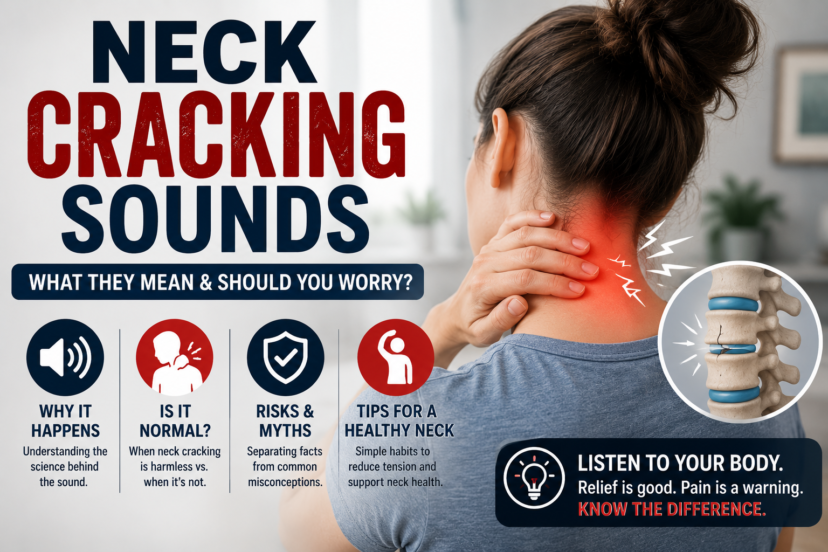
Why do you have more neck cracking sounds as you get older? Have you noticed your neck making more cracking or popping noises than it used to? Maybe you hear a click when turning your head, a pop after stretching, or a series of small cracking sounds during your morning routine. While these noises can be surprising, they’re often a normal part of aging and don’t necessarily mean something is wrong.
For many adults, neck cracking sounds become more noticeable over time as joints naturally change, muscles become tighter, and posture habits affect the way the neck moves. The good news is that, in most cases, these sounds are harmless and can often be reduced by improving posture, staying active, and caring for your neck every day.
This guide explains what causes neck cracking sounds, when they may require medical attention, and practical ways to improve neck comfort, mobility, and long-term spinal health.
⭐ Quick Answer: Neck Cracking Sounds
Neck cracking sounds are commonly caused by gas bubbles releasing inside joints, tendons moving over bones, or age-related changes in the cervical spine. If the sounds are painless, they are usually harmless. However, cracking accompanied by severe pain, numbness, weakness, or loss of movement should be evaluated by a healthcare professional.
Key Takeaways
- Most likely cause: Painless neck popping is most often caused by gas bubbles releasing inside the joints, tendons or ligaments moving over bone, or normal age-related changes in the cervical spine.
- Usually serious? Usually not. Neck noises without pain or other symptoms are often harmless, but cracking accompanied by severe pain, numbness, weakness, dizziness, or limited movement should be assessed by a healthcare professional.
- First thing to check: Pay attention to whether the cracking is painless or occurs with pain, stiffness, swelling, numbness, or reduced range of motion, and note when it happens during daily activities.
- Best solution: To reduce neck cracking sounds, maintain good posture, stretch and strengthen your neck and upper back muscles, stay physically active, and avoid repeatedly forcing your neck to crack.
🦴 Why Neck Cracking Sounds Become More Common With Age
As you get older, your neck naturally experiences wear and tear from years of movement.
Several age-related changes contribute to neck cracking sounds, including:
- Gradual cartilage wear
- Mild joint stiffness
- Reduced flexibility
- Changes in spinal discs
- Tight muscles and ligaments
- Mild arthritis
These changes often affect how the joints glide during movement, making popping or cracking noises more noticeable.
Fortunately, these sounds alone are not usually a cause for concern.
💨 What Actually Causes Neck Cracking Sounds?
Several harmless mechanisms can produce noises in the neck.
Gas Bubble Release
One of the most common causes is the release of tiny gas bubbles inside the fluid that lubricates your joints.
As pressure changes during movement, these bubbles form and collapse, creating the familiar popping sound.
This process is similar to cracking your knuckles.
Tendons Moving Over Bone
Tendons occasionally shift slightly as your neck moves.
When they snap back into position, you may hear a clicking or popping sound.
This is generally normal if it isn’t painful.
Mild Joint Changes
As cartilage gradually becomes thinner with age, joints may move a little differently.
These subtle changes may increase neck cracking sounds during everyday activities.
Muscle Tightness
Tight muscles can alter movement patterns, causing joints to move less smoothly.
Many people notice more neck noises after spending hours working at a computer or looking down at a smartphone.
💻 Poor Posture Can Increase Neck Cracking Sounds
Modern lifestyles place significant stress on the cervical spine.
Common posture habits include:
- Looking down at phones
- Working on laptops
- Leaning toward computer screens
- Rounded shoulders
- Forward head posture
These positions increase muscle tension and reduce normal joint movement, making neck cracking sounds more noticeable.
Improving posture may reduce both stiffness and unnecessary joint noise.
🚶 Staying Active Helps Keep Neck Joints Moving Smoothly
Movement nourishes the joints and supports flexibility.
Healthy activities include:
- Daily walking
- Swimming
- Gentle yoga
- Tai chi
- Light strength training
- Stretching throughout the day
Regular movement helps reduce stiffness that often contributes to cracking sensations.
🤸 Gentle Stretches May Reduce Neck Stiffness
Stretching improves flexibility and helps muscles relax.
Chin Tucks
Gently pull your chin backward while keeping your eyes level.
Hold for five seconds.
Repeat 10 times.
Side Neck Stretch
Tilt your head toward one shoulder without forcing the movement.
Hold for 20–30 seconds.
Repeat on both sides.
Shoulder Rolls
Roll both shoulders backward slowly 10–15 times.
This helps reduce upper back tension that often affects the neck.
Chest Stretch
Stretch the muscles across the front of your chest to counter rounded shoulders.
Always move gently and stop if you experience pain.
🪑 Improve Your Ergonomic Setup
One of the simplest ways to reduce neck strain is to improve your workstation.
Helpful adjustments include:
- Keep the monitor at eye level.
- Sit with your back supported.
- Relax your shoulders while typing.
- Keep elbows close to your body.
- Position your keyboard comfortably.
- Take movement breaks every 30–60 minutes.
Better ergonomics reduce stress on muscles and joints throughout the workday.
💪 Strengthening Exercises Support Long-Term Neck Health
Strong muscles stabilize the cervical spine.
Helpful exercises include:
- Scapular squeezes
- Resistance band rows
- Wall angels
- Face pulls
- Core strengthening exercises
Building upper back and shoulder strength often improves posture and reduces unnecessary stress on neck joints.
😴 Sleep Habits That Support Healthy Neck Movement
Sleep is an important part of recovery.
To support your neck:
- Sleep on your back or side.
- Avoid stomach sleeping when possible.
- Use one supportive pillow.
- Replace flattened pillows.
- Keep your neck aligned with your spine.
Memory foam or cervical-support pillows may help some people maintain more comfortable alignment overnight.
🌿 Natural Relief Methods For Neck Discomfort
If neck cracking is accompanied by mild stiffness, conservative care may help.
Heat Therapy
Warm compresses relax tight muscles and improve circulation.
Gentle Massage
Massage may reduce muscle tension and improve comfort.
Stress Management
Stress often causes muscle tightness.
Helpful options include:
- Deep breathing
- Meditation
- Yoga
- Mindfulness
- Relaxation exercises
Reducing muscle tension may also decrease the frequency of neck noises.
🏥 Can Physical Therapy Help?
Yes. If neck cracking sounds occur with stiffness or recurring discomfort, physical therapy may be beneficial.
A physical therapist may recommend:
- Stretching exercises
- Strengthening exercises
- Manual therapy
- Posture retraining
- Ergonomic education
- Home exercise programs
These treatments help improve joint mobility and support healthy movement patterns.
🥗 Nutrition And Healthy Aging Support Joint Health
Healthy lifestyle habits benefit your entire musculoskeletal system.
Focus on:
- Eating plenty of fruits and vegetables
- Consuming lean protein
- Staying hydrated
- Maintaining a healthy weight
- Getting enough calcium and vitamin D if recommended
- Staying physically active
Some adults discuss supplements such as omega-3 fatty acids, glucosamine, or collagen with their healthcare provider, although research on their effectiveness varies.
👨⚕️ When To See A Doctor About Neck Cracking Sounds
Most neck cracking sounds are harmless.
However, seek medical evaluation if cracking occurs along with:
- Persistent or severe pain
- Numbness or tingling
- Arm weakness
- Difficulty walking
- Loss of coordination
- Fever
- Recent neck injury
- Severe headaches
- Reduced range of motion
- Pain that continues worsening
These symptoms may indicate nerve involvement or another condition requiring professional treatment.
❓ FAQs: Neck Cracking Sounds
Are neck cracking sounds normal?
Yes. Painless neck cracking sounds are common and are usually caused by normal joint movement, gas bubble release, or tendons shifting over bones.
Why does my neck crack every time I turn it?
Frequent cracking may result from joint movement, muscle tightness, or mild age-related changes in the cervical spine.
Is cracking my neck harmful?
Occasional gentle movement that produces a natural pop is usually harmless. However, forcefully twisting your neck repeatedly is not recommended because it may increase the risk of injury.
Can arthritis cause neck cracking sounds?
Yes. Osteoarthritis can change the surfaces of the joints, making cracking or grinding noises more noticeable with age.
Can poor posture make my neck crack more?
Absolutely. Forward head posture and rounded shoulders increase muscle tension and alter joint mechanics, making neck noises more common.
Can exercise reduce neck cracking sounds?
Regular stretching, strengthening, and posture exercises may improve joint movement and reduce stiffness, although some harmless cracking may still occur.
When should I worry about neck cracking?
Seek medical care if cracking is accompanied by severe pain, numbness, weakness, loss of balance, fever, or symptoms following an injury.
🌟 Final Thoughts On Neck Cracking Sounds
Hearing your neck crack or pop can be unsettling, especially as you get older. Fortunately, neck cracking sounds are usually a normal part of aging and are often linked to harmless changes in joint movement, muscle tension, or posture. The sounds themselves are rarely a problem unless they occur with pain or other concerning symptoms.
The best long-term strategy is to focus on healthy daily habits. Maintaining good posture, staying physically active, strengthening your upper back, stretching regularly, and creating an ergonomic workspace can all help support smoother neck movement and greater comfort. With consistency and patience, you can improve mobility, reduce stiffness, and continue enjoying an active, healthy lifestyle for years to come.
Medical Disclaimer
This article is for educational purposes only and should not be considered medical advice. It is not intended to diagnose, treat, cure, or prevent any medical condition. Always consult a qualified healthcare professional if you have persistent or worsening neck pain, numbness, weakness, fever, reduced mobility, or symptoms following an injury. Never delay seeking medical care because of information you have read in this article.
 Explore more: