Neck Pain And Pillows: Is Your Pillow Causing Neck Pain? Signs To Watch For
Waking up with neck stiffness or soreness can make the entire day feel harder. Simple tasks like driving, working, exercising, or even turning your head may suddenly become uncomfortable. Many adults blame stress, aging, or poor posture for their discomfort. While those factors certainly matter, one often-overlooked cause is hiding right under your head every night—your pillow. The connection between neck pain and pillows is stronger than many people realize. A pillow that no longer provides proper support may contribute to stiffness, tension, headaches, and poor sleep quality.
Fortunately, small changes to your sleep habits and pillow setup may help support better spinal alignment, improved mobility, and long-term neck comfort.
⭐ Quick Answer: Neck Pain And Pillows
Neck pain and pillows are often connected because the wrong pillow may place the neck in an unnatural position during sleep. Replacing worn-out pillows and choosing the proper height and support for your sleeping position may help reduce discomfort.
Key Takeaways
Most likely cause: A pillow that is too high, too low, too soft, or too firm, causing your neck to remain out of alignment with your spine throughout the night.
Usually serious? No. Most pillow-related neck pain is caused by poor sleep support and often improves after replacing an unsuitable pillow and improving sleeping posture. Persistent, severe, or worsening symptoms should be evaluated by a healthcare professional.
First thing to check: Check whether your pillow keeps your head and neck in a neutral position, whether it has lost its shape or support, and if your symptoms are worse when you wake up than later in the day.
Best solution: Choose a supportive pillow that matches your sleeping position, replace worn-out pillows when needed, sleep on your back or side, and maintain healthy posture and regular neck mobility exercises during the day.
🛏️ Why Neck Pain And Pillows Are Closely Connected
Your neck spends roughly one-third of your life resting on a pillow.
The purpose of a pillow is simple:
- Support the head
- Maintain spinal alignment
- Reduce pressure on muscles
- Promote comfortable sleep
When a pillow is too high, too flat, too soft, or worn out, the neck may remain in an awkward position for several hours.
Over time, this may contribute to:
- Morning neck stiffness
- Shoulder pain
- Tension headaches
- Reduced range of motion
- Muscle tightness
- Interrupted sleep
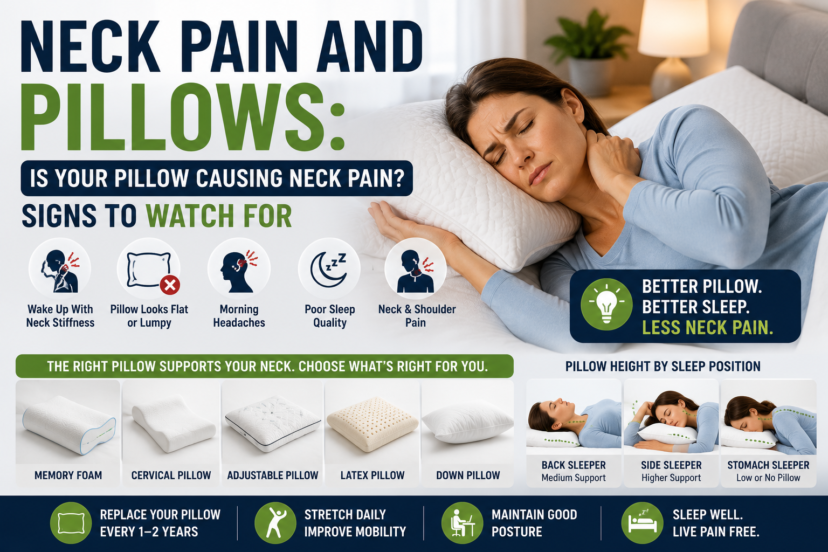
⚠️ Signs Your Pillow May Be Causing Neck Pain
Many people overlook the warning signs.
Common symptoms include:
You Wake Up With Neck Stiffness
If discomfort improves as the day goes on, your pillow may be contributing.
Your Neck Feels Better Away From Home
Many travelers discover their symptoms improve when sleeping elsewhere.
You Frequently Adjust Your Pillow
Constant repositioning often indicates inadequate support.
You Wake Up With Headaches
Poor neck alignment may contribute to tension headaches.
Your Pillow Looks Flat Or Lumpy
Old pillows gradually lose their shape and support.
You Have Shoulder Pain Along With Neck Pain
Improper sleep alignment may affect both areas.
😴 How Sleeping Position Affects Neck Pain And Pillows
Different sleep positions require different pillow heights.
Back Sleepers
Back sleepers generally benefit from medium-height pillows that support the natural curve of the neck.
Side Sleepers
Side sleepers often need thicker pillows that fill the space between the head and shoulder.
Stomach Sleepers
Sleeping on the stomach can place stress on the neck because the head remains rotated for long periods.
Many experts recommend back or side sleeping for better neck comfort.
🛌 Types Of Pillows Commonly Used For Neck Support
Several pillow styles are popular among U.S. consumers.
Memory Foam Pillows
These conform to the shape of the head and neck.
Cervical Pillows
Designed specifically to support spinal alignment.
Adjustable Fill Pillows
Allow users to customize height and firmness.
Latex Pillows
Provide support while maintaining shape.
Feather And Down Pillows
Soft and comfortable, but may lose support more quickly.
The “best” pillow varies from person to person.
⏰ How Often Should You Replace Your Pillow?
Many people keep pillows far longer than recommended.
In general, pillows may need replacement every 1 to 2 years.
Signs it’s time to replace your pillow include:
- Flattening
- Lumps
- Loss of support
- Permanent indentations
- Worsening neck discomfort
Old pillows often fail to provide consistent support.
🧘 Stretching Exercises That May Help Morning Neck Stiffness
Gentle movement after waking may help loosen tight muscles.
Chin Tucks
Help improve posture and strengthen neck muscles.
Upper Trapezius Stretch
Targets the muscles connecting the neck and shoulders.
Neck Rotations
May improve flexibility and mobility.
Shoulder Rolls
Help relieve tension in the upper back.
Chest Stretch
Counteracts rounded shoulders caused by poor posture.
Stretch slowly and avoid painful movements.
🪑 Daytime Posture Matters Too
While neck pain and pillows are important, daytime habits also play a role.
Common causes of neck strain include:
Computer Use
Poor monitor height can contribute to forward head posture.
Smartphone Use
Looking downward repeatedly places additional stress on neck muscles.
Prolonged Sitting
Long periods of inactivity may increase stiffness.
Driving
Extended driving can contribute to muscle tension.
Improving posture throughout the day may enhance the benefits of a supportive pillow.
🚶 Regular Movement Supports Neck Health
Movement helps keep muscles flexible.
Helpful activities include:
- Walking
- Swimming
- Yoga
- Strength training
- Stretching routines
Frequent movement may help reduce stiffness and support healthy aging.
🌿 Home Remedies For Neck Discomfort
Simple home strategies may help relieve mild symptoms.
Heat Therapy
Warm compresses may relax tight muscles.
Gentle Massage
Massage may improve circulation and reduce tension.
Stress Management
Stress frequently contributes to neck tightness.
Helpful techniques include:
- Deep breathing
- Meditation
- Relaxation exercises
- Spending time outdoors
💪 Physical Therapy Options For Ongoing Neck Pain
Persistent symptoms may benefit from professional guidance.
Physical therapists can provide:
- Strengthening exercises
- Mobility training
- Posture correction
- Manual therapy
- Personalized home programs
Many people experience significant improvement when underlying movement patterns are addressed.
🥗 Lifestyle Habits That Support Healthy Sleep
Better sleep supports better recovery.
Helpful habits include:
- Maintaining a regular sleep schedule
- Staying physically active
- Limiting caffeine late in the day
- Reducing screen time before bed
- Managing stress
Many Americans use magnesium supplements, omega-3 fish oil, and vitamin D supplements to support overall wellness. Always consult your healthcare provider before beginning supplements.
⚠️ When To See A Doctor
Seek medical attention if neck pain:
- Persists for several weeks
- Continues worsening
- Causes weakness
- Produces numbness or tingling
- Radiates into the arms
- Follows an injury or accident
- Causes severe headaches
- Interferes with daily activities
A professional evaluation can help identify the underlying cause.
❓ FAQs: Neck Pain And Pillows
Can The Wrong Pillow Cause Neck Pain?
Yes. Poor support may place the neck in an awkward position during sleep.
What Type Of Pillow Is Best For Neck Pain?
The ideal pillow depends on sleeping position, body size, and personal comfort preferences.
How Often Should I Replace My Pillow?
Most pillows should be replaced every 1 to 2 years.
Is Memory Foam Good For Neck Pain?
Many people find memory foam pillows provide comfortable support.
Can A Pillow Cause Headaches?
Poor neck alignment during sleep may contribute to tension headaches.
Is Sleeping Without A Pillow Better?
For most people, some degree of neck support is beneficial.
Should I See A Physical Therapist For Neck Pain?
Persistent or recurring symptoms may benefit from professional evaluation.
🎯 Final Thoughts: Neck Pain And Pillows
The relationship between neck pain and pillows is often overlooked, but proper sleep support can make a meaningful difference.
A supportive pillow, healthy sleep habits, good posture, and regular movement may all work together to promote better neck comfort.
Remember that improvement rarely happens overnight. Small changes performed consistently often provide the greatest long-term benefits.
By taking care of your neck while you sleep, you may wake up feeling better, move with greater confidence, and enjoy a healthier, more active lifestyle.
Medical Disclaimer
This article is for educational purposes only and does not constitute medical advice, diagnosis, or treatment. Always consult a qualified healthcare professional regarding persistent pain or before beginning any exercise or wellness program.
 Explore more: