Neck Pain While Driving: Common Triggers And Fixes That May Help You Feel Better
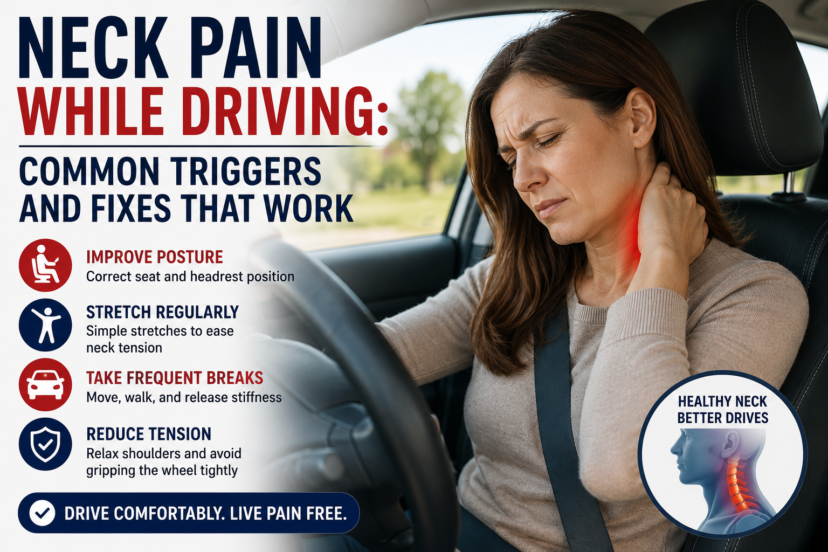
Driving should help you get where you need to go—not leave you feeling stiff and uncomfortable afterward. Yet many adults notice that their neck pain seems worse after commuting, road trips, or even short drives around town. If you experience soreness, limited movement, headaches, or tension after sitting behind the wheel, you’re not alone. Neck pain while driving is extremely common and can become more noticeable with age, poor posture, or long periods of sitting.
The encouraging news is that many cases of neck discomfort while driving are linked to everyday habits that can often be improved. Small changes to your seat position, posture, movement routines, and sleep habits may help support better neck comfort and long-term mobility.
Whether you’re commuting to work or taking a cross-country trip, a few simple adjustments may help you stay more comfortable and enjoy a healthier, more active lifestyle.
💡 Quick Answer: Neck Pain While Driving
Neck pain while driving is commonly caused by poor posture, improper seat positioning, muscle tension, limited movement, and prolonged sitting. Adjusting your driving position, taking breaks, stretching regularly, and improving overall neck mobility may help reduce discomfort.
Key Takeaways
Most likely cause: Poor driving posture, improper seat or headrest positioning, prolonged sitting, and muscle tension that place extra strain on the neck during driving.
Usually serious? No. Most cases of neck pain while driving are related to posture and muscle strain and often improve with better seat adjustments, regular movement, and healthy neck habits. Persistent, severe, or worsening symptoms should be evaluated by a healthcare professional.
First thing to check: Adjust your seat, headrest, steering wheel, and mirrors so your head stays aligned with your spine, and notice whether your symptoms are worse after long drives or heavy traffic.
Best solution: Maintain an upright driving posture, position your headrest correctly, take breaks to stretch during longer trips, strengthen your neck and upper back muscles, and avoid remaining in the same position for extended periods.
🚗 Why Neck Pain While Driving Is So Common
Many people spend hours every week sitting in their vehicles. Unfortunately, prolonged sitting combined with poor posture can place additional stress on the muscles and joints of the neck.
Common reasons neck pain while driving develops include:
- Poor seat positioning
- Forward head posture
- Driving with tense shoulders
- Limited movement during long trips
- Muscle tightness
- Stress-related tension
- Age-related stiffness
- Previous neck injuries
Even small amounts of strain repeated every day may gradually lead to ongoing discomfort.
⚠️ Common Triggers Of Neck Pain While Driving
Poor Headrest Position
A headrest positioned too high or too far back may force your neck into an awkward position.
Sitting Too Far From The Steering Wheel
Reaching forward can cause the shoulders and neck muscles to work harder.
Gripping The Wheel Too Tightly
Stress and tension often lead drivers to tighten their shoulders without realizing it.
Looking Forward To Long Periods
Unlike walking or moving around, driving limits natural neck movement.
Stress And Anxiety
Mental stress often translates into physical muscle tension.
🪑 Proper Driving Posture May Help Reduce Neck Pain
Good driving posture can help support healthy spinal alignment.
Keep Your Head Neutral
Avoid pushing your head forward.
Sit Close Enough To The Steering Wheel
Your elbows should remain slightly bent.
Relax Your Shoulders
Try to keep your shoulders low and relaxed.
Support Your Lower Back
Many drivers benefit from a lumbar support cushion.
Position The Headrest Correctly
The center of the headrest should align with the back of your head.
Proper posture may help minimize neck pain while driving and reduce muscle fatigue.
🔄 Why Long Drives Often Make Neck Pain Worse
Extended sitting can contribute to:
- Muscle stiffness
- Reduced circulation
- Joint tightness
- Increased tension headaches
- Decreased mobility
For road trips, experts often recommend stopping every one to two hours to stretch and walk.
Movement helps restore circulation and may reduce neck discomfort.
🧘 Stretches That May Help Neck Pain While Driving
Chin Tucks
These exercises help improve posture and strengthen deep neck muscles.
Shoulder Rolls
Gentle shoulder movements may reduce tension.
Upper Trapezius Stretch
Tilting your head gently to each side may help loosen tight muscles.
Chest Stretch
Opening the chest can counteract rounded shoulders.
Neck Rotations
Slow side-to-side movements may improve mobility.
Always stretch gently and avoid forcing movement.
💪 Physical Therapy Options For Persistent Neck Pain
If neck pain while driving becomes frequent, physical therapy may help.
A physical therapist may recommend:
- Strengthening exercises
- Posture training
- Mobility work
- Manual therapy techniques
- Personalized stretching routines
Many adults experience improvement after correcting movement patterns and strengthening supporting muscles.
😴 Sleep Habits That Can Affect Driving-Related Neck Pain
Poor sleep posture may worsen neck discomfort.
Helpful habits include:
Sleeping On Your Back Or Side
These positions usually provide better spinal alignment.
Using A Supportive Pillow
The neck should remain aligned with the rest of the spine.
Avoiding Stomach Sleeping
This position may place stress on the neck.
Replacing Old Pillows
Worn-out pillows may no longer provide adequate support.
🥗 Lifestyle Habits That Support Neck Health
Daily habits matter.
Consider:
- Walking regularly
- Staying hydrated
- Managing stress
- Performing mobility exercises
- Strength training
- Eating a balanced diet rich in fruits and vegetables
Omega-3 supplements and magnesium supplements are commonly used by many Americans, although individuals should always consult their healthcare provider before beginning supplements.
🚙 Tips For Long Road Trips
Schedule Breaks
Stop every one to two hours.
Stretch During Fuel Stops
A few minutes of movement can make a difference.
Stay Hydrated
Dehydration may contribute to muscle tightness.
Alternate Drivers When Possible
Reducing continuous driving time may help prevent stiffness.
👨⚕️ When To See A Doctor
Seek medical attention if neck pain:
- Lasts several weeks
- Continues to worsen
- Causes weakness
- Produces numbness or tingling
- Radiates into the arms
- Occurs after an accident
- Is accompanied by severe headaches or fever
- Interferes with daily activities
A healthcare professional can determine the underlying cause and recommend appropriate treatment.
❓ FAQs: Neck Pain While Driving
Why Does My Neck Hurt After Driving?
Poor posture, prolonged sitting, and muscle tension are common causes.
Can Car Seats Cause Neck Pain?
Yes. Improper seat positioning may contribute to discomfort.
How Should I Sit To Avoid Neck Pain While Driving?
Sit upright with relaxed shoulders and your head aligned over your spine.
Is Neck Pain Worse During Long Road Trips?
Long periods of sitting often increase stiffness and muscle fatigue.
Can Stress Cause Neck Pain While Driving?
Yes. Stress frequently causes muscle tension in the neck and shoulders.
Can Physical Therapy Help Neck Pain?
Physical therapy may help improve posture, flexibility, and strength.
Should I Use Heat Or Ice For Neck Pain?
Heat may help with muscle tightness, while ice is sometimes used for acute irritation. Ask your healthcare provider for personalized recommendations.
📌 Conclusion: Neck Pain While Driving
Neck pain while driving is common, but it does not have to become a normal part of everyday life. Small improvements in posture, regular movement, healthy sleep habits, and consistent stretching may support better neck comfort over time.
Recovery rarely happens overnight. However, patience and daily habits often make the biggest difference. By taking care of your neck today, you can stay active, move with greater confidence, and enjoy a healthier, more comfortable future.
Medical Disclaimer
This article is for educational purposes only and should not be considered medical advice, diagnosis, or treatment. Always consult a qualified healthcare professional regarding persistent pain or before beginning any exercise or wellness program.
 Explore more: