Neck Pain After Work: What’s Really Happening And How To Feel Better
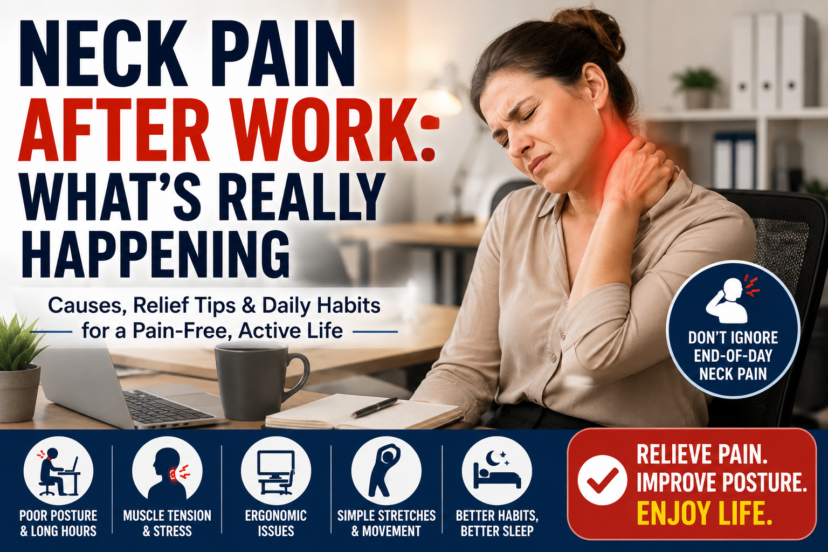
If you regularly experience neck pain after work, you’re far from alone. Whether you spend your day at a computer, behind the wheel, on your feet, or performing physical labor, it’s common to finish the workday with a stiff, sore, or tight neck. For many adults, this daily discomfort can slowly interfere with exercise, hobbies, sleep, and overall quality of life.
The good news is that neck pain after a long day at work is often linked to habits that can be improved. Hours of sitting, repetitive movements, poor posture, stress, muscle fatigue, and limited movement all place extra strain on the muscles and joints that support your head. Over time, these small stresses can build into noticeable discomfort.
This guide explains what’s really happening inside your neck, why work-related neck pain develops, and the practical, science-backed strategies that can help you move more comfortably, improve posture, and stay active for years to come.
💼 Quick Answer: Neck Pain After Work
Neck pain after work is commonly caused by prolonged sitting, poor posture, muscle fatigue, repetitive movements, workplace stress, and inadequate workstation ergonomics. These factors place extra strain on the muscles, joints, and ligaments supporting the neck. Regular movement breaks, better posture, ergonomic adjustments, stretching, strengthening exercises, and quality sleep can significantly reduce everyday neck discomfort.
Key Takeaways
Most likely cause: Muscle fatigue and poor posture after hours of repetitive work.
Usually serious? No. Most work-related neck pain improves with movement, ergonomic changes, and healthy daily habits.
First thing to check: Evaluate your workstation, posture, and how often you move during the day.
Best solution: Improve ergonomics, take regular movement breaks, strengthen your upper back, and stretch daily.
🧠 Why Neck Pain After Work Happens
Your neck supports a head that weighs approximately 10 to 12 pounds. Throughout the workday, your muscles constantly stabilize and position your head while you read, type, drive, lift, or look at screens.
When your posture isn’t ideal, or you remain in the same position for hours, certain muscles stay contracted almost continuously. Eventually, they become fatigued, tight, and sore.
Unlike a sudden injury, work-related neck pain usually develops gradually through repeated daily strain.
Common contributors include:
- Prolonged sitting
- Poor workstation setup
- Repetitive movements
- Mental stress
- Limited physical activity
- Muscle weakness
The longer these habits continue, the more likely discomfort becomes.
🪑 Poor Posture Throughout The Day
One of the biggest causes of neck pain after work is poor posture.
Forward head posture occurs when your head moves in front of your shoulders while looking at a monitor, laptop, paperwork, or phone.
This seemingly small shift dramatically increases the workload placed on your neck muscles.
Signs of poor posture include:
- Rounded shoulders
- Chin jutting forward
- Looking down for extended periods
- Slouching while sitting
Correcting posture often provides noticeable relief within weeks.
💻 Your Workstation May Be Working Against You
Even healthy muscles become strained if your workstation isn’t properly adjusted.
Common ergonomic problems include:
- Monitor positioned too low
- Chair without lumbar support
- Keyboard too far away
- Mouse placed awkwardly
- Frequent laptop use without external accessories
A properly adjusted workstation keeps your head balanced over your shoulders instead of leaning forward.
🔄 Sitting Too Long Stiffens Your Neck
The human body is designed for movement.
Unfortunately, many office workers remain seated for six to eight hours daily.
Long periods of sitting reduce circulation, tighten muscles, and decrease joint mobility.
Try standing or walking briefly every 30 to 60 minutes to reduce muscle fatigue and stiffness.
💪 Muscle Fatigue Builds Throughout The Day
Your neck muscles aren’t necessarily weak—they’re simply tired.
Holding your head in one position for hours forces muscles to contract continuously.
Eventually they become:
- Tight
- Tender
- Fatigued
- Less efficient
This explains why discomfort often appears near the end of the workday.
😟 Stress Makes Neck Muscles Tighten
Many people unknowingly tense their shoulders during stressful situations.
Deadlines, meetings, phone calls, and heavy workloads may cause muscles around the neck and shoulders to remain contracted for hours.
Stress-related muscle tension often feels like:
- Tight shoulders
- Headaches
- Aching neck muscles
- Reduced range of motion
Relaxation techniques can significantly reduce this type of discomfort.
📱 Looking Down At Devices
Even after work ends, many people spend several more hours looking at smartphones or tablets.
This continues the same forward head posture experienced throughout the workday.
Try raising devices closer to eye level whenever possible.
🏋️ Weak Supporting Muscles
Strong muscles help support the neck throughout the day.
Weakness in the upper back, shoulders, and core allows posture to deteriorate more quickly, increasing strain on the cervical spine.
Strength training doesn’t need to be complicated—even two or three sessions per week can make a meaningful difference.
🤸 How To Relieve Neck Pain After Work
Fortunately, many simple habits help reduce discomfort.
Improve Your Posture
Focus on:
- Keeping ears aligned over shoulders
- Relaxing your shoulders
- Sitting tall
- Looking straight ahead
Small posture corrections performed consistently often provide the biggest long-term improvements.
Take Frequent Movement Breaks
Stand, stretch, or walk for two to five minutes every hour.
Movement restores circulation and prevents muscles from remaining contracted too long.
Stretch Tight Muscles
Gentle stretches may include:
- Chin tucks
- Neck rotations
- Shoulder rolls
- Chest stretches
- Upper trapezius stretches
Stretch slowly and never force painful movements.
Strengthen Your Upper Back
Exercises that support neck health include:
- Resistance band rows
- Scapular squeezes
- Wall angels
- Face pulls
- Deep neck flexor exercises
These muscles help maintain better posture throughout the workday.
Apply Heat
A warm shower or heating pad for 15 to 20 minutes often relaxes tight muscles after work.
Heat generally works best for muscle tension rather than acute injuries.
Improve Your Sleep
Recovery happens while you sleep.
Support your neck by:
- Using a supportive pillow
- Sleeping on your back or side
- Maintaining a regular sleep schedule
- Replacing worn pillows
Better sleep often leads to less stiffness the following morning.
🌿 Natural Ways To Reduce Everyday Neck Discomfort
Healthy daily habits support long-term neck health.
Helpful strategies include:
- Walking daily
- Staying hydrated
- Managing stress
- Practicing yoga or tai chi
- Maintaining a healthy weight
- Taking regular breaks from screens
- Performing mobility exercises consistently
Some adults also ask about magnesium supplements for muscle function. Speak with your healthcare provider before starting any supplement, especially if you take prescription medications.
🚫 Mistakes That Can Make Neck Pain Worse
Avoid these common habits:
- Sitting for hours without standing
- Ignoring posture
- Working on a laptop all day without raising the screen
- Sleeping with poor neck support
- Looking down at your phone constantly
- Avoiding all physical activity because of mild pain
Gentle movement is usually more beneficial than complete rest.
👨⚕️ When To See A Doctor
Although most cases of neck pain after work improve with conservative care, seek medical evaluation if you experience:
- Severe pain following an injury
- Pain lasting longer than several weeks
- Numbness or tingling in your arms
- Muscle weakness
- Difficulty using your hands
- Fever with neck stiffness
- Pain that wakes you every night
- Loss of coordination
- Problems with bladder or bowel control
These symptoms may indicate a more serious underlying condition.
❓ FAQs: Neck Pain After Work
Why does my neck hurt after sitting all day?
Long periods of sitting can fatigue neck muscles, reduce circulation, and encourage poor posture, all of which contribute to stiffness and soreness.
Is neck pain after work normal?
It’s common but shouldn’t be ignored. Persistent discomfort often signals that posture, ergonomics, or movement habits need improvement.
How often should I stretch during work?
Aim to move or stretch every 30 to 60 minutes, even if it’s only for a minute or two.
Can stress really cause neck pain?
Yes. Stress and anxiety often cause muscles in the neck and shoulders to tighten, leading to soreness and tension headaches.
Does standing reduce neck pain?
Alternating between sitting and standing may reduce muscle fatigue and improve posture throughout the day.
What exercises help prevent work-related neck pain?
Strengthening the upper back, shoulders, core, and deep neck muscles while performing gentle stretches can improve posture and reduce discomfort.
Should I use ice or heat after work?
For muscle tightness, heat is generally more helpful because it promotes relaxation and improves blood flow. Ice may be more appropriate after a recent injury or acute inflammation.
📌 Final Thoughts On Neck Pain After Work
Experiencing neck pain after work doesn’t have to become part of your daily routine. In many cases, small changes—such as improving posture, adjusting your workstation, taking regular movement breaks, strengthening your upper back, and sleeping with proper support—can significantly reduce discomfort over time.
The key is consistency. Rather than searching for a quick fix, focus on building healthier habits that protect your neck throughout the entire day. With regular movement, good ergonomics, and a commitment to staying active, you can improve mobility, reduce stiffness, and enjoy greater comfort both at work and long after the workday ends.
Medical Disclaimer
This article is for educational purposes only and should not be considered medical advice. It is not intended to diagnose, treat, cure, or prevent any medical condition. Always consult your physician or another qualified healthcare professional for personalized advice regarding neck pain or persistent symptoms. Seek immediate medical attention if you experience severe pain, numbness, weakness, loss of coordination, or symptoms following a significant injury.
 Explore more: