Neck Pain Aging: Why Neck Pain Often Starts During Your 40s And 50s
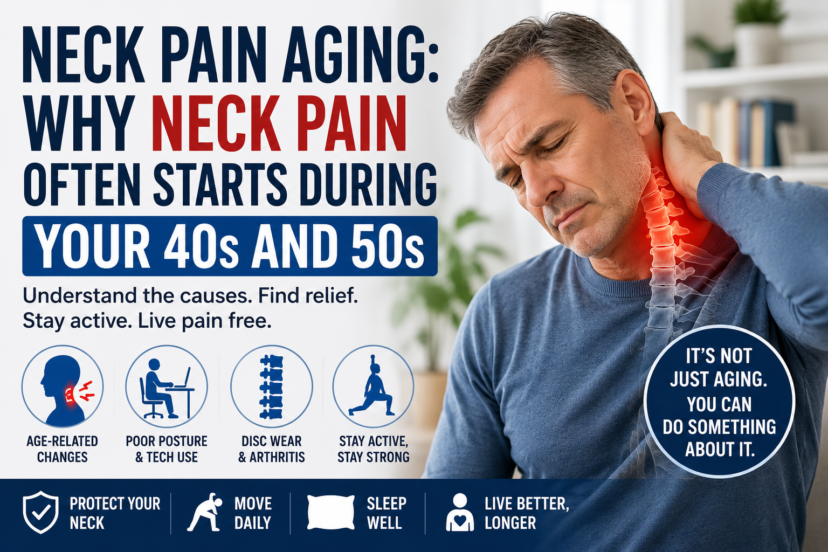
Many adults are surprised when they begin experiencing neck pain aging in their 40s or 50s. Activities that never caused discomfort before—working at a computer, driving, reading, or simply sleeping—can suddenly leave your neck feeling stiff and sore. While aging naturally brings changes to your muscles, joints, and spine, neck pain isn’t something you have to simply accept.
The good news is that many causes of age-related neck discomfort respond well to healthy lifestyle habits. Improving posture, strengthening supporting muscles, staying physically active, optimizing your workspace, and improving sleep habits can all help reduce everyday stiffness and improve mobility.
In this guide, you’ll learn why neck pain becomes more common during midlife, what changes occur in the body, and the practical, science-backed strategies that can help you stay active, flexible, and comfortable for years to come.
🧠 Quick Answer: Neck Pain Aging
Neck pain aging often develops because the discs, joints, muscles, and ligaments of the cervical spine gradually change over time. Years of poor posture, repetitive movements, reduced muscle strength, arthritis, and less daily activity may all contribute to stiffness and discomfort. Fortunately, regular exercise, posture improvements, quality sleep, strength training, and stretching can significantly improve neck comfort and help maintain mobility as you age.
Key Takeaways
Most likely cause: Natural age-related changes combined with years of posture habits and muscle weakness.
Usually serious? No. Most age-related neck pain improves with exercise, posture correction, and healthy daily habits.
First thing to check: Notice whether prolonged sitting, computer work, or poor sleep positions make your symptoms worse.
Best solution: Stay active, strengthen neck and upper back muscles, improve posture, optimize your workspace, and maintain healthy sleep habits.
🦴 Why Neck Pain Becomes More Common With Aging
Growing older doesn’t automatically cause neck pain.
Instead, small changes gradually accumulate over many years.
The cervical spine contains seven vertebrae, discs that cushion the bones, numerous joints, ligaments, tendons, and muscles that work together to support your head. As you age, these structures naturally experience wear and tear.
Common age-related changes include:
- Reduced disc hydration
- Mild joint degeneration
- Decreased muscle mass
- Less flexibility
- Reduced collagen production
- Slower tissue recovery
These normal changes make the neck slightly less resilient, especially when combined with long hours of sitting, poor posture, or inactivity.
🔍 Common Reasons Neck Pain Starts In Your 40s And 50s
Years Of Poor Posture Add Up
Many adults spend decades looking down at phones, working on computers, or driving long distances.
Forward head posture places extra stress on the cervical spine.
Research suggests that every inch the head moves forward increases the load placed on neck muscles, making them work much harder throughout the day.
Muscle Strength Naturally Declines
Beginning in middle age, adults gradually lose muscle mass if they don’t regularly perform strength training.
Weaker muscles provide less support for the cervical spine, making fatigue and discomfort more likely.
Strengthening the upper back, shoulders, and core can help reduce this strain.
Discs Lose Some Flexibility
The discs between the vertebrae naturally lose water content over time.
Although this is a normal part of aging, less flexible discs may absorb shock less efficiently, making stiffness more noticeable after sleeping or sitting for long periods.
Arthritis Becomes More Common
Osteoarthritis is one of the most common causes of chronic neck pain with aging.
The cartilage that cushions joints gradually wears down over time, sometimes leading to:
- Morning stiffness
- Reduced range of motion
- Mild inflammation
- Occasional grinding sensations
Many people experience only mild symptoms that respond well to conservative treatment.
Daily Movement Often Decreases
Many adults become less physically active during midlife.
Less movement allows muscles to tighten and joints to become stiffer.
Even simple daily walks can improve circulation, flexibility, and overall neck function.
Recovery Takes Longer
As we age, muscles and connective tissues often recover more slowly after physical activity.
Minor muscle strains that once disappeared overnight may now linger for several days.
This makes recovery habits—such as stretching, sleep, hydration, and exercise—even more important.
💪 Healthy Habits That Help Reduce Neck Pain Aging
The encouraging news is that many of the biggest contributors to neck pain are modifiable.
Stay Physically Active
Movement is one of the best natural treatments for neck stiffness.
Aim for:
- Walking most days
- Strength training two or three times weekly
- Regular stretching
- Gentle mobility exercises
Consistent activity helps lubricate joints and maintain muscle strength.
Improve Your Posture
Good posture reduces unnecessary stress on your neck throughout the day.
Helpful habits include:
- Keeping ears aligned over shoulders
- Looking straight ahead instead of downward
- Relaxing your shoulders
- Sitting with lumbar support
- Taking standing breaks every hour
Small posture improvements can have a surprisingly large impact over time.
Strengthen Supporting Muscles
Strong muscles help stabilize the cervical spine.
Focus on exercises that strengthen:
- Upper back
- Rhomboids
- Core muscles
- Deep neck flexors
- Rotator cuff muscles
A physical therapist can recommend exercises that match your fitness level.
Stretch Every Day
Daily stretching helps preserve flexibility.
Helpful stretches include:
- Chin tucks
- Side neck stretches
- Shoulder rolls
- Chest stretches
- Upper trapezius stretches
Move gently and avoid bouncing.
💤 Improve Sleep To Support Neck Health
Quality sleep allows muscles and connective tissues to recover.
To improve overnight neck comfort:
- Use a supportive pillow.
- Sleep on your back or side.
- Avoid sleeping on your stomach whenever possible.
- Replace flattened pillows regularly.
- Keep your neck in a neutral position.
Poor sleep posture can contribute to morning stiffness regardless of age.
🪑 Optimize Your Workspace
Many adults spend eight or more hours each day sitting.
A few ergonomic improvements can reduce daily strain:
- Raise your monitor to eye level.
- Keep elbows close to 90 degrees.
- Support your lower back.
- Position your keyboard close to your body.
- Use a headset instead of holding the phone with your shoulder.
Regular movement breaks are just as important as good workstation design.
🌿 Natural Ways To Ease Neck Discomfort
Many people find relief by combining several simple approaches.
Consider:
- Applying heat for 15–20 minutes
- Taking warm showers
- Practicing stress reduction
- Staying hydrated
- Walking daily
- Gentle yoga or tai chi
- Massage therapy
- Foam rolling the upper back
Some adults also ask about supplements such as magnesium or omega-3 fatty acids to support overall muscle and joint health. Speak with your healthcare provider before starting any supplement, particularly if you take prescription medications.
🚫 Common Mistakes That Can Make Neck Pain Worse
Avoid these habits:
- Sitting for hours without moving
- Looking down at your phone constantly
- Skipping strength training
- Ignoring poor posture
- Sleeping with an unsupportive pillow
- Trying to “push through” severe pain
- Stopping all activity because of mild discomfort
Remaining gently active is often more beneficial than complete rest for everyday neck stiffness.
👨⚕️ When To See A Doctor
Although most cases of neck pain aging improve with conservative care, some symptoms require medical evaluation.
Contact your healthcare provider if you experience:
- Severe neck pain after an injury
- Pain lasting more than several weeks
- Numbness or tingling in the arms
- Muscle weakness
- Difficulty with balance
- Fever with neck stiffness
- Pain that wakes you every night
- Loss of bladder or bowel control
- Unexplained weight loss
Early evaluation can help identify conditions that require additional treatment.
❓ FAQs: Neck Pain Aging
Is neck pain a normal part of aging?
Some age-related changes are normal, but ongoing neck pain is not inevitable. Many adults maintain excellent neck mobility through regular exercise and healthy habits.
Why does my neck hurt more after 40?
Years of posture habits, reduced muscle strength, disc changes, arthritis, and less physical activity often begin contributing to neck discomfort during middle age.
Can exercise help age-related neck pain?
Yes. Strength training, stretching, walking, and mobility exercises are among the most effective long-term strategies for reducing stiffness and improving neck function.
What is the best sleeping position for neck pain?
Sleeping on your back or side with a supportive pillow usually places the least strain on your neck.
Can arthritis cause neck stiffness?
Yes. Cervical osteoarthritis commonly causes stiffness, especially in the morning or after prolonged inactivity.
Should I stop exercising if my neck hurts?
Not usually. Gentle movement is often beneficial. However, avoid activities that significantly increase pain and consult a healthcare professional if symptoms persist.
Can physical therapy help neck pain after age 50?
Absolutely. Physical therapists can improve posture, flexibility, strength, and movement patterns while providing individualized exercise programs.
📌 Final Thoughts On Neck Pain Aging
Experiencing neck pain aging during your 40s and 50s doesn’t mean your most active years are behind you. While natural changes occur in the spine over time, many of the biggest contributors to neck discomfort are within your control.
Simple habits like improving posture, staying physically active, strengthening your muscles, stretching daily, and creating an ergonomic workspace can make a meaningful difference. Rather than looking for a quick fix, focus on building consistent routines that support long-term neck health.
With patience and steady effort, you can reduce stiffness, improve mobility, stay active, and continue enjoying the activities you love with greater comfort and confidence.
Medical Disclaimer
This article is for educational purposes only and should not be considered medical advice. It is not intended to diagnose, treat, cure, or prevent any medical condition. Always consult your physician or another qualified healthcare professional for personalized advice regarding persistent neck pain or other medical concerns. Seek immediate medical attention if you experience severe pain, weakness, numbness, loss of coordination, or symptoms following a significant injury.
 Explore more: